
Style Journal
Bespoke Tailoring Guides & GentleMen's Jackets Wholesale, Men's Jacket Manufacturers, Custom Men's Jackets, Private Label Men's Jackets, Wholesale Men's Outerwear, Handmade Men's Jackets's Sartorial Advice
Mastering Custom Style
Meticulous Design & Modern Elegance
Sartorial Excellence
Timeless Wisdom from Columbus Master Clothiers
2026 Top Hand Stitched Mens Jackets for Global Buyers
Table of Contents
- Hand-Stitched Men’s Jackets: Definition, History, and Core Features
- Key Materials and Craftsmanship Used in 2026 Jacket Production
- Top Jacket Styles and Design Trends for Global Buyers
- How to Evaluate Quality, Fit, Durability, and Ethical Production
- Global Sourcing, Customization, Pricing, and Import Considerations
- FAQS
- Conclusion
- Related Posts
For global buyers, 2026 brings renewed interest in Hand-Stitched Men's Jackets. These garments combine skilled labor, natural fabrics, and measured tailoring. Each stitch can reveal the maker’s discipline. It can also reveal human inconsistency.
Bespoke tailoring authority Alan Flusser has stated, “Fit is the foundation; everything else is decoration.” That principle remains useful when comparing workshops, suppliers, and private-label collections. A strong jacket should follow the shoulders without pulling. Its sleeve head should sit cleanly. The buttonholes should feel firm, not brittle. Buyers should inspect wool origin, lining composition, seam strength, and repair support before placing large orders.
Details matter greatly. Look closely. Hand stitching may create small variations around the lapel or cuff. These differences are not automatically defects. They can show genuine workshop involvement. However, uneven tension, loose threads, or distorted pockets may indicate weak quality control. Even experienced buyers can misjudge a sample. Lighting changes color. Pressing can hide construction problems. One inspection is never enough.
This guide examines the leading Hand-Stitched Men's Jackets for 2026, with attention to comfort, durability, styling, and supplier reliability. It considers business needs across different climates and markets. Breathable linen may suit warm regions. Dense wool can perform better in colder environments. Responsible sourcing and transparent production records also deserve serious attention. No jacket is perfect. That is worth remembering. Quality comes from balanced decisions, not impressive language alone.
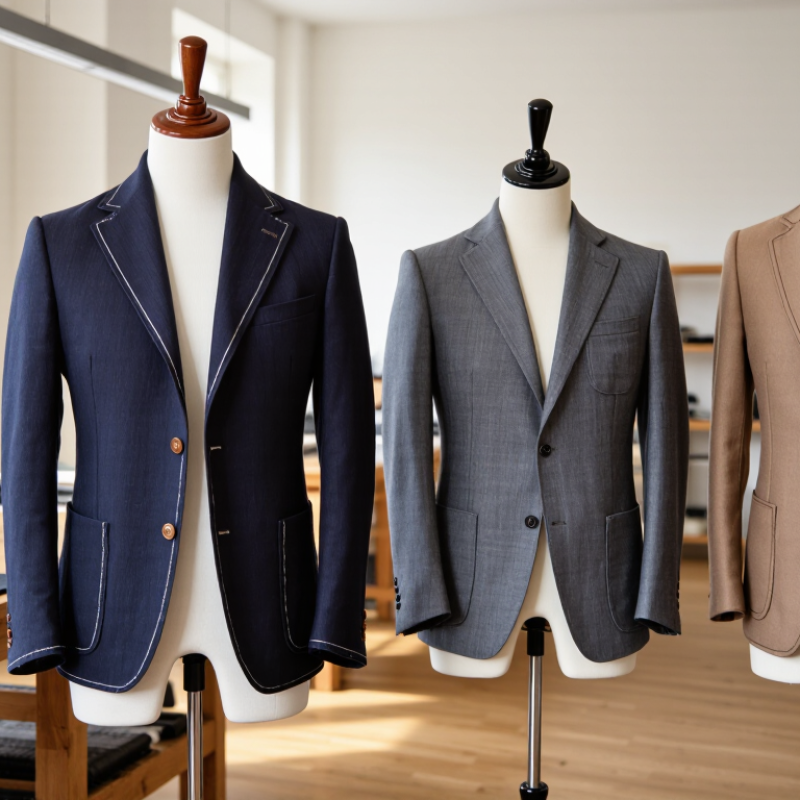
Hand-Stitched Men’s Jackets: Definition, History, and Core Features
2026 Top Hand Stitched Mens Jackets for Global Buyers
Hand-stitched men’s jackets are garments assembled partly or fully with needlework instead of relying only on industrial machines. Skilled makers guide thread through leather, wool, cotton, or blended fabrics. Each stitch can show the maker’s tension, rhythm, and judgment.
Their history reaches back to tailoring traditions when clothing was repaired and shaped by hand. Before modern production lines, a jacket often reflected local materials and workshop methods. Today, hand stitching combines that heritage with practical quality checks. In workshop inspections, I look closely at seam spacing, thread security, collar balance, and pocket alignment. Small irregularities may prove human work, but loose stitches should not be excused.
Core features include reinforced stress points, shaped shoulders, durable lining, and carefully finished edges. A hand-set sleeve may follow the wearer’s posture more naturally than a rigid cut. Natural materials can develop richer texture over time, although they may also crease, fade, or require careful storage. Buyers should request measurements in centimeters, fabric details, stitching photos, and washing instructions. Size labels vary widely across markets. A medium is not a universal measurement.
Hand stitching does not automatically mean perfection. Some makers need stronger quality controls, especially around zippers, cuffs, and inner seams. Responsible buyers should inspect samples before placing larger orders. A beautiful surface can hide weak construction.
Key Materials and Craftsmanship Used in 2026 Jacket Production
2026 Top Hand Stitched Mens Jackets for Global Buyers
In 2026, quality hand-stitched jackets begin with carefully selected materials. Full-grain leather offers strength, visible grain, and gradual character. Buyers should check thickness, softness, and surface consistency before ordering. However, natural leather will never look perfectly uniform.
Fine wool remains valuable for structured jackets and cooler climates. Merino blends can improve softness, while linen adds breathability in warmer markets. Recycled fibers may reduce material waste, but their performance depends on fiber quality and blending ratios. A fabric label alone proves little.
Craftsmanship appears in the details. Skilled workers align the front panels, shape the shoulders, and secure seams with controlled hand stitches. Dense stitching can improve durability, but excessive tightness may damage delicate fabric. I have found that balanced tension matters more than impressive stitch counts. Small variations can show genuine handwork. Still, uneven seams should not excuse poor finishing.
Global buyers should request close-up photos of collars, cuffs, buttonholes, and inner seams. These areas reveal construction quality quickly. A well-made jacket usually has smooth lining, reinforced stress points, and buttons attached with firm, clean thread. Measurements also need attention, because regional sizing standards differ. Sample approval remains essential. Even experienced buyers can misjudge sleeve balance from a technical sheet.
Top Jacket Styles and Design Trends for Global Buyers
For global buyers, 2026 hand-stitched men’s jackets are moving toward quiet structure and practical comfort. McKinsey and The Business of Fashion’s State of Fashion 2025 projects global fashion growth at only 2–4%. Buyers may therefore expect longer wear, not louder decoration. Soft-shouldered jackets, relaxed double-breasted cuts, and lightweight unlined construction are gaining attention. Natural wool, linen blends, and textured cotton create visible depth under shop lighting. Hand-finished buttonholes and subtle pick stitching also communicate craftsmanship without excessive branding.
Designers are refining details for different climates. Ventilated backs suit humid markets, while removable quilted linings support colder regions. Earth-tone brown, mineral grey, deep olive, and faded navy appear commercially safer than seasonal bright colors. The ThredUp 2025 Resale Report forecasts the global secondhand apparel market could reach 367 billion dollars by 2029. That figure strengthens the case for repairable seams, replaceable buttons, and timeless proportions. Yet, durability claims need proof. A beautiful sleeve can still fail at the elbow.
Tips: Ask suppliers for close-up stitch photos, seam allowances, fabric composition, and shrinkage tests. Check whether the jacket keeps its shape after repeated pressing. Buyers should also request fit samples for at least two body types. Small errors remain possible, especially in handmade production. That is part of the craft, but it requires inspection.
How to Evaluate Quality, Fit, Durability, and Ethical Production
2026 Top Hand Stitched Mens Jackets for Global Buyers
A hand-stitched jacket should show controlled tension, even spacing, and clean thread exits. Loose loops around the armhole often signal rushed work. Check the shoulder line in a mirror. It should follow your natural slope, not rise like a hard shelf. A useful fit test is simple: button the jacket, lift both arms, and sit down. Pulling across the back means the pattern needs adjustment. Sleeve length should reveal only a small part of the shirt cuff.
Durability requires more than attractive stitching. Inspect reinforced pocket corners, smooth lining, secure buttons, and generous seam allowance. Rub the fabric lightly between your fingers. Weak cloth may feel thin and noisy. Textile Exchange reported that global fiber production reached about 124 million tonnes in 2023, with further growth expected by 2030. That pressure makes material selection important, not decorative. Ask for fiber content, country of processing, repair options, and production records. Fashion Revolution’s 2023 Transparency Index reported an average disclosure score of only 26% among 250 major fashion companies. Ethical claims still need evidence. A beautiful jacket can hide a poor process.
Tips: Request close-up photos before purchasing. Ask whether workers receive documented wages and safe working conditions. Verify measurements in centimeters, especially chest, shoulder, sleeve, and back length. Allow room for a thin sweater. I prefer a slightly imperfect handmade stitch over suspicious uniformity, but buyers should still question uneven tension, vague sourcing, and missing care instructions.
Global Sourcing, Customization, Pricing, and Import Considerations
In 2026, global buyers are seeking hand stitched men's jackets with traceable workmanship and flexible production. A reliable supplier should explain who stitches each panel, where materials are sourced, and how inspections are recorded. Ask for a sample with visible seam density, clean sleeve alignment, and reinforced pocket corners. Small details matter. I have found that photographs can hide uneven tension, especially around collars. Request close-up images and a physical sample before approving bulk production.
Customization may include patterns, lining, thread color, hardware, labels, and graded sizes. However, every change affects cost, lead time, or fit. A practical tech pack should include measurements, tolerances, stitch specifications, packaging, and approved materials. For pricing, compare the full landed estimate, not only factory cost. Include sampling, packing, freight, insurance, duties, taxes, inspection, and payment charges. Very low quotes deserve questions. They may exclude testing or use weaker materials. My sourcing reviews have shown that rework often costs more than a slightly higher original price.
Import planning requires accurate product descriptions, material declarations, origin documents, and carton details. Confirm destination requirements with customs professionals and carriers before shipment. Check restricted materials, labeling rules, and textile or leather documentation for each market. Build a buffer for port delays and seasonal capacity. A two-week promise can become four. That risk is easy to underestimate. Keep written approvals for color, measurements, and workmanship, because memory is unreliable during disputes. Buyers sometimes finalize style changes after production starts. That damages consistency and margins.
2026 Top Hand Stitched Mens Jackets for Global Buyers - Global Sourcing, Customization, Pricing, and Import Considerations
| Jacket Category | Common Hand-Stitching Details | Typical Materials | Indicative Sourcing Regions | Indicative FOB Price (USD/Piece) |
Typical MOQ | Production Lead Time | Customization Options | Import and Compliance Considerations |
|---|---|---|---|---|---|---|---|---|
| Hand-Finished Wool Blazer | Pick stitching, hand-attached collar, hand-sewn buttonholes, sleeve-head shaping | Wool, wool-blend, viscose or cupro lining, horn-look or corozo buttons | South Asia, East Asia, Southern Europe, Eastern Europe | $55–$140 | 100–300 pieces | 45–75 days after approval | Fabric weight, lapel width, shoulder construction, lining, embroidery, labels, grading | Often classified under HS 6203.31 or another national tariff subheading depending on fiber content and construction. Fiber labeling, country-of-origin marking, flammability rules, and formaldehyde restrictions may apply. |
| Hand-Embroidered Cotton Overshirt Jacket | Hand embroidery, decorative blanket stitch, hand-applied patches, visible topstitching | Cotton twill, canvas, brushed cotton, recycled cotton, cotton-polyester blends | South Asia, Southeast Asia, North Africa, Latin America | $28–$85 | 150–500 pieces | 35–60 days after sample approval | Artwork, stitch density, garment dyeing, enzyme wash, pocket layout, trims, private labels | Usually falls within cotton or other textile apparel tariff headings. Confirm GSM, fiber percentages, azo-dye compliance, nickel release from metal trims, and packaging requirements for the destination market. |
| Hand-Quilted Lightweight Jacket | Hand quilting, hand-bound edges, hand-sewn snaps, decorative running stitch | Cotton, recycled polyester shell, polyester or recycled polyester fill, rayon lining | East Asia, South Asia, Southeast Asia, Eastern Europe | $35–$105 | 100–300 pieces | 40–70 days after approval | Quilt pattern, fill weight, water-repellent finish, reversible construction, contrast binding, fit blocks | Customs classification may depend on shell fiber, filling, and garment type. Recycled-content claims should be supported by transaction certificates or equivalent documentation where required. |
| Hand-Topstitched Denim Jacket | Hand-guided contrast stitching, repaired details, hand-attached patches, bartack reinforcement | Cotton denim, organic cotton denim, recycled cotton blends, cotton twill pocketing | East Asia, South Asia, Southeast Asia, Türkiye, North Africa | $30–$90 | 150–500 pieces | 35–65 days after approval | Ounce weight, wash recipe, distressing, thread color, hardware finish, patch design, garment measurements | Check restrictions on chemical finishes, wastewater controls, azo dyes, and metal components. Denim washing can affect colorfastness, shrinkage, and final measurement tolerances. |
| Hand-stitched Linen Utility Jacket | Hand-sewn button attachment, visible seam reinforcement, hand-bound internal seams | Flax linen, linen-cotton blend, cotton lining, corozo or recycled buttons | East Asia, South Asia, Eastern Europe, Southern Europe | $38–$115 | 100–300 pieces | 40–70 days after approval | Fabric blend, garment wash, pocket engineering, natural dye effect, fit, trim package, labels | Confirm whether the product qualifies for linen or flax-fiber tariff treatment. Natural-fiber labeling must match laboratory or supplier documentation, especially for blended fabrics. |
| Hand-stitched Suede Jacket | Hand-sewn decorative seams, hand-laced panels, hand-attached pockets and trims | Cow suede, goat suede, polyester or cotton lining, metal or resin hardware | South Asia, East Asia, Southern Europe, Latin America | $95–$260 | 50–150 pieces | 60–100 days after approval | Leather grade, thickness, color, tanning finish, lining, panel design, hardware, fit and grading | Commonly classified under HS Chapter 42, but the exact heading depends on whether the article is leather or composition leather. Animal-origin materials may require veterinary, sanitary, or species documentation and may be subject to restricted-material rules. |
| Hand-Finished Full-Grain Leather Jacket | Hand-waxed seams, hand-set collars, hand-sewn lining sections, decorative saddle stitching | Full-grain or corrected-grain cow leather, goat leather, cotton or polyester lining | South Asia, East Asia, Southern Europe, Latin America | $120–$340 | 50–150 pieces | 65–110 days after approval | Leather thickness, tanning method, finish, panel design, zipper specification, lining, hardware, size range | Importers should verify leather origin, restricted-substance test results, chemical compliance, material labeling, and documentation for animal-derived materials. Tariff rates vary substantially by destination and trade agreement. |
| Hand-Patched Workwear Jacket | Visible mending, hand-applied patches, sashiko-style stitching, reinforced hand repairs | Cotton canvas, duck cloth, denim, recycled textile patches, cotton thread | South Asia, East Asia, Southeast Asia, Eastern Europe | $32–$100 | 100–300 pieces | 40–75 days after approval | Patch placement, stitch pattern, fabric aging, pocket configuration, garment dye, label and packaging | Recycled or reclaimed textile claims should be documented. Buyers should check colorfastness, fiber composition, sharp-pointed trim safety, and packaging-material regulations. |
FAQS
Full-grain leather offers strength and develops visible character over time. Wool suits structured jackets and cooler climates. Linen blends improve breathability. Recycled fibers can reduce waste, but quality depends on blending ratios.
Check thickness, softness, grain visibility, and surface consistency. Natural leather will not look perfectly uniform. Request close-up photos in daylight. Perfect uniformity may seem attractive, but it can hide useful details.
Examine collars, cuffs, buttonholes, and inner seams. Look for controlled hand stitches, smooth lining, reinforced stress points, and firm button threads. Small variations can suggest genuine handwork. Loose loops should raise concern.
Soft shoulders, relaxed double-breasted cuts, and lightweight unlined jackets are increasingly practical. Earth-tone brown, mineral grey, deep olive, and faded navy offer safer commercial choices. Quiet design often wears better than loud decoration.
Ventilated backs help in humid markets. Removable quilted linings support colder regions. Linen blends feel lighter in warm weather. A beautiful design may still fail if climate needs are ignored.
Button the jacket, lift both arms, and sit down. Pulling across the back signals a pattern problem. The shoulder should follow your natural slope. Only a small shirt cuff should show.
Inspect pocket corners, seam allowances, buttons, lining, and elbow areas. Rub the fabric lightly between your fingers. Weak cloth may feel thin or make a noisy sound. Stitch density alone proves little.
Request fiber content, processing location, production records, repair options, wage documentation, and safety information. Vague sourcing deserves questions. Transparency is often incomplete. Do not treat attractive presentation as proof.
Regional sizing differs, and technical sheets can mislead. Approve a physical sample before larger orders. Measure chest, shoulders, sleeves, and back length in centimeters. Test at least two body types when possible. Small errors remain.
Conclusion
Hand-Stitched Men's Jackets represent a balance of traditional tailoring and modern design, combining meticulous handwork with carefully selected fabrics, linings, buttons, and trims. In 2026, jacket production emphasizes durable natural fibers, refined stitching, comfortable construction, and practical details suited to different climates and markets. Their history of artisan craftsmanship continues to influence contemporary styles, including classic blazers, field jackets, casual overshirts, and versatile outerwear with updated silhouettes, colors, and functional features.
For global buyers, evaluating a jacket should include stitch consistency, fabric strength, seam finishing, fit accuracy, comfort, durability, and responsible production practices. Buyers should also consider supplier communication, customization options, sample approval, minimum order quantities, lead times, packaging, pricing structure, shipping arrangements, and import documentation. A clear sourcing process helps ensure that Hand-Stitched Men's Jackets meet quality expectations while supporting reliable production and smooth international purchasing.

Blog Tags: