
Style Journal
Bespoke Tailoring Guides & GentleCustom Men's Clothing Manufacturer, Men's Custom Apparel Manufacturer, Private Label Men's Clothing, Wholesale Men's Custom Clothing, Men's Clothing OEM Manufacturer, Custom Clothing Manufacturer's Sartorial Advice
Mastering Custom Style
Meticulous Design & Modern Elegance
Sartorial Excellence
Timeless Wisdom from Columbus Master Clothiers
7 Best Men's Custom Clothing Services for Global Buyers
Table of Contents
- What Global Buyers Should Know About Custom Menswear
- How to Evaluate Custom Clothing Services Worldwide
- Key Features of the Seven Leading Service Models
- Ordering, Fittings, Production, and International Shipping
- Comparing Quality, Pricing, Turnaround, and Customer Support
- FAQS
- Conclusion
- Related Posts
Global buyers are no longer choosing men’s tailoring by fabric alone. They compare fit accuracy, delivery reliability, transparent pricing, and responsible production. This shift makes a dependable Men's Custom Clothing Service increasingly important for business wardrobes, weddings, travel, and everyday wear.
McKinsey and The Business of Fashion reported that global fashion growth would remain modest in 2024, at roughly 2% to 4%. In slower markets, service quality can matter more than flashy branding. Deloitte’s Global Powers of Retailing research also highlights the importance of digital trust, customer experience, and operational consistency. For custom clothing, these ideas become practical. A buyer needs clear size instructions, responsive communication, fabric photographs, and realistic delivery estimates. Small details matter. A usable measurement guide can prevent an expensive remake.
This guide reviews seven leading men’s custom clothing services for international buyers. Each option is considered through fit technology, tailoring experience, fabric selection, alteration policies, shipping clarity, and customer support. Public reviews and company information offer useful evidence, but they are not perfect. A beautiful product photograph cannot prove long-term durability. A low starting price may exclude premium wool, duties, or alterations. I may also favor services with clearer websites, even when quieter specialists deliver excellent garments. That limitation deserves attention. The best choice depends on body shape, location, budget, deadline, and personal standards. Buyers should confirm current policies before ordering, especially for returns and cross-border delivery.
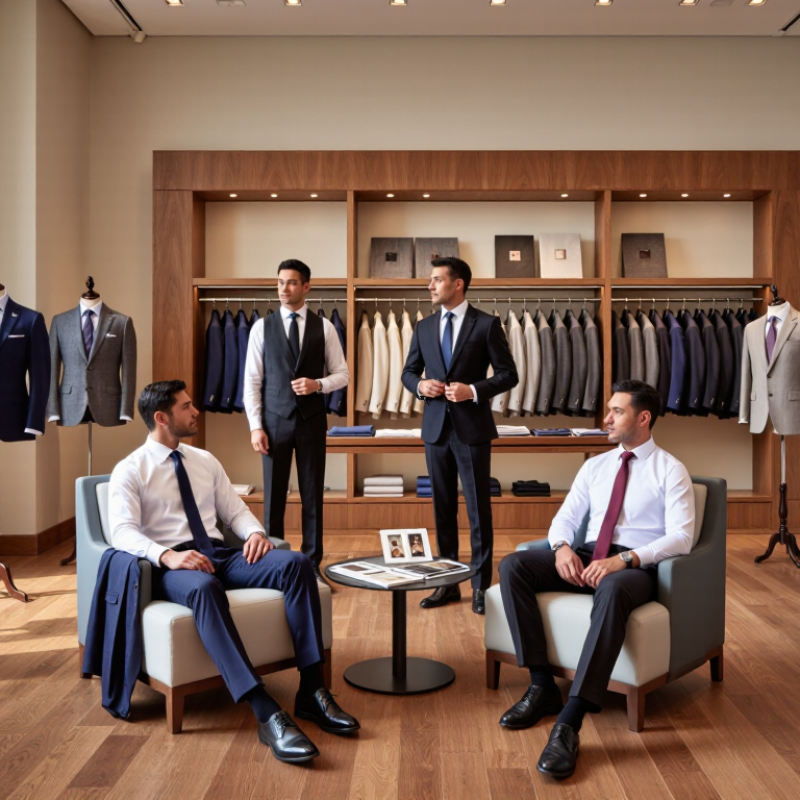
What Global Buyers Should Know About Custom Menswear
Global buyers should judge custom menswear services beyond attractive photographs. McKinsey and The Business of Fashion reported that fashion growth remained modest in 2024, increasing pressure on suppliers to prove value. A reliable service should explain fabric composition, pattern adjustments, production capacity, and correction policies. Ask for a physical sample. Digital previews can hide shoulder slope, sleeve balance, and trouser break.
Measurements need disciplined handling. ISO 8559-1 provides a useful reference for body measurement definitions, but local sizing habits still differ. Request a measurement guide with diagrams, not only a list of numbers. Confirm whether measurements are taken over a shirt or directly on the body. One small mistake can distort an entire order. It happens.
Material transparency also matters. Textile Exchange’s Materials Market Report 2024 estimated global fiber production at about 124 million tonnes in 2023. That figure shows the scale of material sourcing and its environmental pressure. Buyers should request fiber percentages, care instructions, recycled-content evidence, and test documentation where relevant. A low price may exclude alterations, shipping, duties, or remake costs.
For international orders, clarify minimum quantities, sample fees, payment stages, delivery windows, and customs responsibilities in writing. Check how the supplier protects measurement data and handles rejected pieces. Independent audits can support claims, but they do not replace direct verification. A service may promise “perfect fit,” yet fit is personal, regional, and sometimes inconsistent. Allow room for one correction cycle, especially when ordering jackets, formal trousers, or uniforms across several countries.
How to Evaluate Custom Clothing Services Worldwide
7 Best Men's Custom Clothing Services for Global Buyers
How to Evaluate Custom Clothing Services Worldwide
The best custom clothing service is not always the cheapest. Global buyers should compare seven areas: fitting, fabric choice, tailoring skill, sample quality, communication, delivery control, and alteration support. A reliable provider explains each step clearly. Their size guide should include chest, shoulder, sleeve, waist, and garment length measurements. Photos alone are not enough.
Ask for fabric swatches and one physical sample before placing a large order. Check stitching near collars, buttons, pockets, and trouser seams. Experienced providers should explain shrinkage, color variation, and care requirements. They should also confirm production timelines in writing. Vague promises create avoidable pressure. I have found that fast replies do not always indicate strong craftsmanship. That assumption deserves caution.
Tips: Request a measurement review by video or email. Confirm whether alterations are included. Ask how damaged items are handled. Check payment records, business registration, and independent customer feedback. Use simple technical language when discussing fit. Keep approved measurements and sample photos in one file. Small details matter.
A useful comparison sheet can score every service from one to five. Record fabric accuracy, sample fit, response time, packaging, and delivery consistency. Do not ignore regional differences in sizing or climate. A wool jacket suitable for a cold city may feel uncomfortable elsewhere. Customs delays can also affect schedules, even with careful planning. Leave extra time for corrections, because the first fitting may reveal problems no form can predict.
Key Features of the Seven Leading Service Models
For global buyers, custom clothing is less about decoration and more about control. The strongest service models differ in fit, communication, production scale, and after-sales support. An in-person bespoke atelier offers hand-shaped patterns, multiple fittings, and direct stylist advice. It suits executives who value craft and can attend appointments. Made-to-measure services use a base pattern, then adjust measurements, posture, and preferred ease. They are faster, but the first fitting still matters. Remote measurement services rely on guided videos, measurement charts, and a verification call. This model is convenient across borders, though body posture can distort results.
Digital 3D tailoring adds virtual garment previews before cutting. Buyers can inspect lapel width, trouser break, lining color, and pocket position on a screen. It improves communication, not physical fit. A sample helps. Small-batch manufacturers serve retailers or purchasing teams needing consistent runs. Their key features include fabric availability, size grading, quality checkpoints, and clear minimum order quantities. Private-label production combines pattern development, labeling, packaging, and delivery coordination. It can save time, yet buyers should confirm pattern ownership and approve pre-production samples. Corporate wardrobe services focus on repeat orders for staff. They need measurement records, replacement procedures, and consistent fabric lots.
In my experience, reliable providers document every change. They explain lead times honestly and show close-up images of stitching before dispatch. Clear payment stages help, too. Fit varies. One overlooked detail is alteration support. A perfect first order is not guaranteed. Buyers should test one garment, record fit issues, and revise the specification. Questions about fiber content, care labels, shipping documents, and return terms deserve written answers. Service quality appears in these small records, especially when several time zones separate buyer and maker.
Ordering, Fittings, Production, and International Shipping
7 Best Men's Custom Clothing Services for Global Buyers
Ordering custom menswear internationally requires more than choosing fabric online. Reliable services explain measurements, construction options, payment stages, and expected timelines before accepting an order. A detailed size guide helps, but personal measurements can still vary. I recommend measuring twice, wearing a thin shirt, and recording the date. Small errors happen.
Fittings should use clear photos, shoulder checks, sleeve comparisons, and written feedback. Some services offer virtual consultations, while others send a trial garment before production. A first fitting may feel imperfect. That is normal, especially with posture differences or unfamiliar cuts. Ask how many adjustments are included and whether changes affect the final price. Good specialists explain why a sleeve needs shortening instead of simply promising a perfect result.
Production updates should identify fabric approval, cutting, assembly, pressing, and final inspection. Request photos of key details, such as buttonholes, lining, and trouser balance. International shipping needs careful planning. Confirm the carrier, tracking method, packaging, estimated transit time, and responsibility for import charges. Accurate invoices and product descriptions can reduce customs delays. However, delivery estimates are never absolute; holidays, weather, and border reviews may interfere. Keep written records of measurements, approvals, and agreed dates. That simple habit protects both sides when expectations change.
7 Best Men's Custom Clothing Services for Global Buyers - Ordering, Fittings, Production, and International Shipping
| Service Category | Ordering Process | Fitting Method | Typical Production Time | International Shipping | Best For | Main Consideration |
|---|---|---|---|---|---|---|
| Remote Made-to-Measure | Select fabric and style online, submit measurements, approve the digital order, and pay a deposit or full balance. | Self-measurement guide, measurement video, and optional review by a fit specialist. | Approximately 3–6 weeks after measurements are approved. | Express courier commonly takes 3–7 business days; customs duties may be charged separately. | Buyers who need personalized garments without visiting a showroom. | Measurement accuracy is critical; alteration coverage should be confirmed before purchase. |
| Virtual Consultation Tailoring | Book a video consultation, discuss fabric and design options, receive a quotation, and approve the specification sheet. | Live video guidance, existing-garment comparison, and remote measurement verification. | Approximately 4–8 weeks, depending on design complexity and revision rounds. | Tracked air delivery is generally available; delivery time varies by destination and customs clearance. | First-time international buyers who want personal guidance. | Time-zone differences and video-camera limitations can affect communication. |
| Trunk Show or Traveling Fitting | Reserve an appointment during a scheduled regional event, select garments in person, and confirm the order onsite. | Professional fitting with direct measurement, pinning, and posture assessment. | Usually 4–10 weeks after the appointment and final approval. | Finished garments are shipped to the buyer; local delivery may be included or billed separately. | Buyers located near major cities included in the fitting schedule. | Appointments are limited and may require advance travel or scheduling. |
| Showroom-Based Custom Service | Visit a showroom, review samples, select construction details, complete the fitting, and approve the final order. | In-person measurements and fitting; a second fitting may be available before completion. | Approximately 5–10 weeks, depending on the number of garments. | International courier service with tracking; import taxes and brokerage rules depend on the destination country. | Buyers who prioritize fabric inspection and face-to-face fitting. | Travel costs and appointment availability may increase the total purchase cost. |
| Hybrid Try-On Program | Order a trial garment or fitting sample, provide feedback, and authorize production of the final items. | Physical try-on sample with online feedback and adjustment instructions. | Approximately 6–12 weeks, including sample production and revisions. | Two-way shipping may be required; return labels and sample duties should be clarified in advance. | Buyers who want lower fit risk for complex or high-value garments. | The sample stage increases both lead time and shipping requirements. |
| Small-Batch Custom Production | Submit a specification sheet, confirm minimum quantities, approve a prototype, and place a production order. | Prototype fitting, graded size measurements, and approved sample comments. | Approximately 6–14 weeks, including sampling and batch production. | Courier or consolidated freight may be used; commercial invoices and customs documentation are required. | Retailers, wedding parties, corporate groups, and repeat purchasers. | Minimum order quantities, prepayment terms, and quality inspection should be agreed in writing. |
| Full Bespoke Commission | Begin with a consultation, create a paper pattern, approve cloth and details, attend fittings, and authorize final completion. | Multiple in-person fittings with pattern adjustments and hand-finished construction. | Approximately 8–20 weeks or longer for complex garments and international fitting schedules. | Final garments are normally shipped by insured, trackable courier; delivery insurance and customs terms should be confirmed. | Buyers seeking maximum personalization, distinctive construction, and long-term wardrobe value. | Highest cost and longest lead time; additional fittings may be necessary. |
Comparing Quality, Pricing, Turnaround, and Customer Support
7 Best Men's Custom Clothing Services for Global Buyers
When comparing custom clothing services, quality begins before production. Request fabric swatches, stitching photos, and a physical sample. Check seam strength, lining, button attachment, and shrinkage after washing. A skilled service should explain fabric weight, construction methods, and measurement tolerance clearly. I have found that a perfect size chart can still produce an imperfect fit. Real fitting feedback matters more.
Pricing needs careful reading. A low quote may exclude pattern development, sample fees, alterations, packaging, or international delivery. Ask for a complete cost breakdown in writing. Turnaround should include design approval, sampling, production, inspection, and dispatch. Ten working days may mean only sewing time. Customer support is equally important. Reliable teams answer specific questions, record revisions, and provide progress images. Time-zone delays happen, but repeated vague replies are a warning sign.
Tips: Send accurate measurements, reference photos, and your preferred fit. Order one sample before placing a larger order. Compare final fabric color in natural light. Keep a written approval record. Do not judge quality from photographs alone. If communication feels rushed, pause and ask for clarification. That small delay may prevent expensive corrections later. Pricing, speed, and craftsmanship rarely reach their maximum together. Choose the balance that fits your priorities.
FAQS
Compare fit, fabric choices, tailoring skill, sample quality, communication, delivery control, and alteration support. Fast replies do not prove strong craftsmanship.
Record chest, shoulders, sleeve length, waist, and garment length. Measure twice while wearing a thin shirt. Small errors happen.
A sample reveals fit and construction problems before a large order. Inspect collars, buttons, pockets, and trouser seams closely. A screen cannot show everything.
Request fabric swatches and confirm fiber content, shrinkage, color variation, and care instructions. Consider the climate. Heavy wool may feel uncomfortable in a warm city.
Guided videos and verification calls improve convenience across borders. However, posture can distort results. Clear shoulder photos and written measurements reduce confusion.
Ask about sleeve length, shoulder balance, trouser break, and preferred ease. Confirm how many alterations are included. The first fitting may feel imperfect.
Updates should cover fabric approval, cutting, assembly, pressing, and final inspection. Request close-up images of buttonholes, lining, and trouser balance.
Confirm tracking, packaging, transit estimates, invoices, and responsibility for import charges. Holidays, weather, and border reviews can cause delays. Plans are not guarantees.
Keep approved measurements, sample photos, payment stages, and agreed dates in one file. Corporate orders also need replacement procedures and consistent fabric lots.
Score each service from one to five for fabric accuracy, sample fit, response time, packaging, and delivery consistency. The scoring may still miss hidden problems.
Conclusion
Choosing the right Men's Custom Clothing Service requires global buyers to look beyond appearance and consider the complete purchasing experience. This includes understanding measurement methods, fabric selection, style customization, fitting support, communication standards, and the provider’s ability to serve international customers. The strongest service models may include online tailoring platforms, remote consultation systems, made-to-measure specialists, and full-service production teams, each offering different advantages in flexibility, personalization, and convenience.
Before placing an order, buyers should compare garment quality, pricing transparency, production timelines, alteration policies, and customer support. Clear instructions for measurements, sample approval, fitting adjustments, and order tracking can help reduce mistakes. International shipping procedures, packaging, duties, and delivery reliability are also important factors. By evaluating these areas carefully, customers can select a service that balances craftsmanship, value, turnaround time, and dependable communication while achieving a polished wardrobe suited to their personal needs.

Blog Tags: