
Style Journal
Bespoke Tailoring Guides & GentleWholesale Men’s Tuxedos, Custom Tuxedo Manufacturer, Men’s Tuxedo Supplier, Bulk Tuxedos for Men, Custom Tuxedos Wholesale, Private Label Tuxedos's Sartorial Advice
Mastering Custom Style
Meticulous Design & Modern Elegance
Sartorial Excellence
Timeless Wisdom from Columbus Master Clothiers
China Best Custom Tuxedos for Men Wholesale Supplier
Table of Contents
- What Defines a Custom Tuxedo Wholesale Supplier in China
- Key Customization Options for Men’s Wholesale Tuxedos
- Step-by-Step Custom Tuxedo Production Process
- How to Evaluate a Reliable Chinese Tuxedo Supplier
- Wholesale Pricing, Quality Control, and Order Fulfillment Factors
- FAQS
- Conclusion
- Related Posts
Choosing China Best Custom Tuxedos for Men Wholesale Supplier requires more than comparing prices. It demands careful attention to tailoring experience, fabric quality, production control, and dependable communication. This guide explores how professional buyers can evaluate Custom Tuxedos for Men suppliers with greater confidence.
A capable supplier should understand classic tuxedo structure, modern slim cuts, and different formalwear requirements. Details matter. Lapel width, jacket balance, trouser drape, button placement, and lining comfort can change the entire appearance. Buyers should request fabric samples, size charts, stitching photos, and pre-production samples before placing larger orders. A clear measurement process also reduces fitting problems across different markets.
Reliable factories usually provide consistent timelines, transparent quotations, and practical quality inspections. They should explain fabric composition, customization limits, packaging methods, and after-sales support without vague promises. Experience is useful, but it does not replace verification. Buyers still need to review sample quality and test communication speed. Mistakes can happen, even with experienced teams. That deserves honest discussion.
This article introduces key selection points for wholesale buyers, including design flexibility, material sourcing, sample development, order management, and quality assurance. It also considers how suppliers can support retailers, wedding brands, event companies, and private-label businesses. The best partnership is not always the cheapest option. It is the one that delivers suitable craftsmanship, stable communication, and repeatable results. Small details build trust.
What Defines a Custom Tuxedo Wholesale Supplier in China
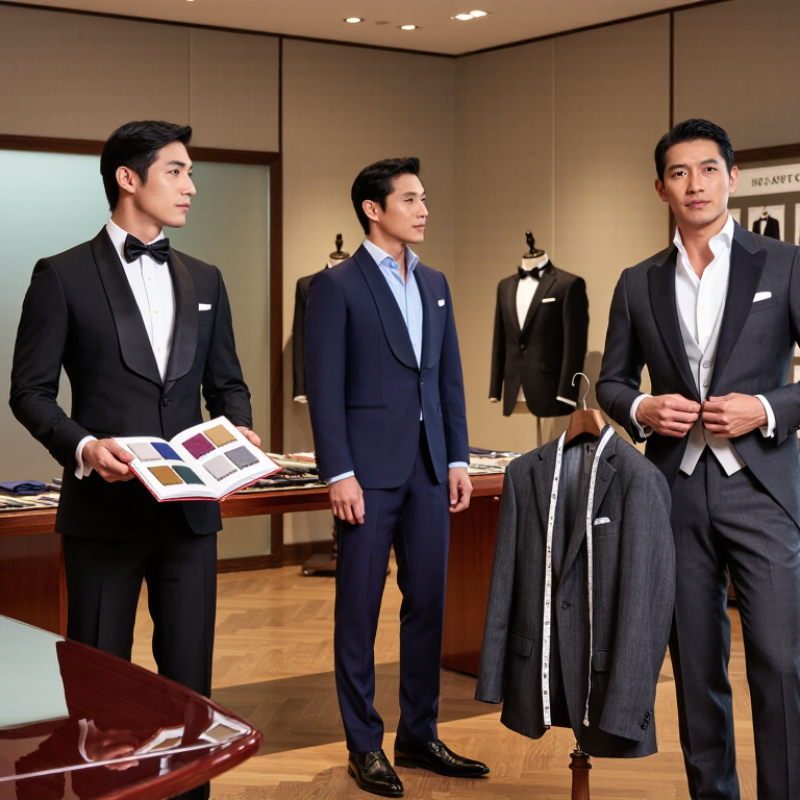
A custom tuxedo wholesale supplier in China is defined by more than low pricing. It should understand formalwear construction, buyer expectations, and production limits. Experienced suppliers discuss lapel shape, canvas structure, shoulder balance, trouser rise, and button placement before quoting. They also request detailed measurements or a graded size chart. Small details matter. A poorly balanced shoulder can ruin the entire silhouette.
Professional suppliers provide a clear development process. They usually prepare a technical sheet, confirm fabric composition, and create a sample before bulk production. Buyers should inspect stitching density, lining attachment, pressing quality, and color consistency under natural light. Reliable communication is equally important. A supplier should explain minimum order quantities, sampling fees, production time, packaging, and inspection procedures without hiding conditions.
Practical experience also reveals weaknesses. No workshop gets every first sample perfect. Sleeve length may need adjustment, or the trousers may feel too tight while sitting. A trustworthy supplier accepts useful criticism and records revisions carefully. Quality control should include measurement checks, seam inspections, and final appearance review. Written records, stable workmanship, and transparent updates help buyers build confidence over repeated orders. The best partnership develops through evidence, not promises.
Key Customization Options for Men’s Wholesale Tuxedos
Wholesale tuxedo buyers need customization that looks refined and remains practical during production. Fabric selection sets the foundation. Wool offers breathable comfort and a smooth drape, while wool blends can reduce costs and improve durability. For warmer events, lightweight fabrics may perform better. However, very thin fabric can reveal construction flaws.
Lapel design strongly affects the tuxedo’s character. Shawl lapels create a soft, formal appearance, while peak lapels add sharper visual structure. Satin width should match the jacket’s proportions. A three-quarter-inch satin edge often suits a modern cut.
Button choices also matter. Covered buttons provide a cleaner finish, while metal buttons create stronger contrast. The result must match the intended customer group.
Fit customization requires accurate measurements and consistent grading. Wholesale orders may include short, regular, and long sizes, with separate adjustments for chest, waist, and sleeve length. A useful sample should test shoulder balance, trouser rise, and jacket movement. One sample can look perfect on a model but fail across different body shapes. This is where careful fitting experience becomes valuable. Pocket angles, lining color, and interior labels can also support a distinctive collection. Production teams should review stitching, pressing, seams, and color consistency before shipment. Small defects are easy to miss under showroom lighting. A second inspection is slower, but usually worth the effort.
Step-by-Step Custom Tuxedo Production Process
A reliable wholesale supplier builds each custom tuxedo through a controlled, measurable process. It begins with a design brief, size chart, fabric choice, lapel shape, buttons, and delivery quantity. Our production team checks these details before cutting. Small errors grow quickly in bulk orders. They do.
Pattern makers convert approved measurements into paper or digital patterns. A skilled cutter places fabric carefully, matching stripes and controlling nap direction. Tailors assemble the jacket, trousers, lining, and canvas or fusing. Each stage receives inspection for seam strength, symmetry, pressing, and measurement accuracy. A sample garment should be tested on a real fit model when possible. This reveals issues that a size chart cannot show. Sometimes, a sleeve needs adjustment after approval. That delay is frustrating, but correcting it early protects the full order.
Tips: Request a pre-production sample, written measurement tolerances, fabric composition, and an inspection report. Check shoulder balance, collar roll, trouser break, button placement, and color under daylight. Keep approved references. Clear records prevent assumptions.
How to Evaluate a Reliable Chinese Tuxedo Supplier
China Best Custom Tuxedos for Men Wholesale Supplier
How to Evaluate a Reliable Chinese Tuxedo Supplier
Choosing a reliable Chinese tuxedo supplier requires more than comparing wholesale prices. Request a registered business profile, workshop address, and production photographs. Then verify details through a video call or independent inspection. Ask who controls cutting, sewing, pressing, and final packing. Clear responsibility matters. A polished showroom proves little.
Evaluate custom ability with a measured sample, not a catalog image. Send complete specifications covering fabric composition, lapel width, lining, buttons, color codes, size charts, and packaging. Check shoulder balance, sleeve length, trouser drape, and button alignment. Small errors become expensive across hundreds of units. Request fabric swatches and shrinkage data before approving production. Be cautious when every answer sounds perfect. Real factories usually explain limits, lead times, and possible rework.
Reliability also appears in quality records and communication. Request a written inspection plan with measurement tolerances, defect categories, and shipment release steps. Confirm how corrections are handled. Use milestone approvals, and keep signed specifications together. Ask about export experience in your target market, but verify documents independently. No checklist is perfect. A supplier may pass one audit and still miss a fitting detail. Test a small wholesale order first, then compare delivered garments against the approved sample.
Wholesale Pricing, Quality Control, and Order Fulfillment Factors
China Best Custom Tuxedos for Men Wholesale Supplier
Wholesale tuxedo sourcing from China requires more than comparing a factory’s lowest quotation. Price should reflect fabric weight, lining quality, construction details, packaging, and customization. Ask for a tiered quote based on order quantity, fabric selection, and design complexity. A 100-piece order may need a different cost structure than 500 pieces. Request a written breakdown before approving production. Savings can mislead.
Quality control begins with a clear specification sheet. Include measurements, color references, button materials, stitch density, and seam allowances. A pre-production sample can reveal sleeve imbalance, uneven lapels, or poor pressing. Inspect fabric rolls before cutting, then check finished garments by size and color. Random inspections are useful, but they cannot replace consistent factory supervision. I have seen buyers focus on appearance while overlooking shrinkage after cleaning. That mistake can create costly returns.
Order fulfillment depends on more than sewing speed. Confirm the production schedule, sample approval date, carton dimensions, labeling rules, and shipping documents. A reliable supplier should provide progress photographs and report delays early. Keep a small time buffer for alterations, rework, or port congestion. The cheapest delivery promise may not be realistic. Ask how rejected garments are corrected, recorded, and replaced. Written quality standards make disagreements easier to resolve.
China Custom Tuxedo Wholesale: Order Fulfillment Timeline
This planning chart shows typical business-day requirements for a custom tuxedo wholesale order, from material sourcing through dispatch. Actual timing depends on order volume, customization complexity, fabric availability, sample approval, and inspection requirements.
FAQS
It should understand formalwear construction, measurements, and production limits. A poor shoulder balance can damage the entire silhouette. Low pricing is not enough.
Provide fabric composition, lapel width, lining details, button placement, colors, and graded size charts. Include packaging requirements and measurement tolerances. Clear details reduce avoidable revisions.
Request a measured sample, workshop photographs, and a video inspection. Ask who manages cutting, sewing, pressing, and final packing. A polished showroom proves little.
Check shoulder balance, sleeve length, trouser drape, lapel symmetry, and button alignment. Inspect stitching density, lining attachment, and pressing quality. Use natural light.
Swatches confirm color and surface feel before bulk production. Shrinkage data helps prevent sizing problems after cleaning. This detail is easy to overlook.
Request a written breakdown based on quantity, fabric choice, construction, packaging, and customization. A 100-piece order may cost differently from 500 pieces. Cheap can mislead.
The plan should include measurement checks, seam inspections, defect categories, and final appearance reviews. Inspect fabric rolls before cutting. Random checks alone are insufficient.
Record each issue, such as tight trousers or uneven sleeves, and request documented revisions. No first sample is always perfect. Useful criticism matters.
Confirm production dates, sample approval deadlines, carton dimensions, labeling, and shipping documents. Keep extra time for alterations, rework, or port delays. Promises may be optimistic.
It tests workmanship, communication, sizing consistency, and correction procedures. Compare delivered garments with the approved sample. One inspection cannot reveal everything.
Conclusion
A reliable Chinese wholesale supplier of Custom Tuxedos for Men combines skilled tailoring, flexible production capacity, and consistent quality management. Key customization options may include fabric composition, color, lapel style, jacket structure, trouser cut, lining, buttons, embroidery, and size grading. These choices allow buyers to create tuxedo collections suited to different markets, occasions, and customer preferences while maintaining a cohesive product identity.
The production process typically begins with design confirmation, fabric and accessory selection, pattern development, sample approval, bulk cutting, professional sewing, pressing, and final inspection. When evaluating a supplier, buyers should review communication efficiency, customization experience, production facilities, sample accuracy, and quality control procedures. Wholesale pricing should be assessed alongside fabric quality, workmanship, packaging, minimum order quantities, lead times, and shipping coordination. Clear specifications, staged inspections, and an agreed fulfillment schedule can help reduce errors and support dependable long-term cooperation.
Blog Tags: