Style Journal
Bespoke Tailoring Guides & Gentlemen's Sartorial Advice
Mastering Custom Style
Meticulous Design & Modern Elegance
Sartorial Excellence
Timeless Wisdom from Columbus Master Clothiers
China Best Custom Suit Jackets Manufacturer?
Table of Contents
- China’s Suit-Jacket Manufacturing Base: 2023 Apparel Exports Exceeded US$290B
- Custom Suit-Jacket Fundamentals: Fit, Fabric, and 220–280 g/m² Weight
- How to Vet Chinese Manufacturers Using ISO 9001 and AQL 2.5 Standards
- Factory Comparison: MOQ, Sampling Accuracy, Production Capacity, and Lead Time
- Selecting the Best Partner Through Cost, Compliance, Customization, and Export Data
- FAQS
- Conclusion
- Related Posts
Choosing the China Best Custom Suit Jackets Manufacturer requires more than comparing factory prices. Custom Suit Jackets combine fabric selection, pattern engineering, tailoring, and dependable production control. A low quotation may look attractive, yet it can hide weaker canvasing, inconsistent sizing, or limited quality inspection.
Industry data supports a careful approach. McKinsey’s The State of Fashion 2025 describes a slower, more uncertain fashion market, increasing pressure on brands to improve value and operational efficiency. The Business Research Company also reports continued growth in the global tailored clothing market, driven by premium products, professional wardrobes, and personalized apparel. These trends make supplier capability increasingly important, especially for brands ordering private-label jackets in different fits and seasonal fabrics.
Experience matters on the factory floor. A reliable Chinese manufacturer should provide measurable fabric specifications, pre-production samples, pattern confirmation, and final inspections. Details such as sleeve pitch, shoulder balance, buttonhole density, lining tension, and seam allowance can determine whether a jacket feels refined. Certifications and traceable material documentation add credibility, but they do not replace physical inspection. A certificate alone is not proof of perfect workmanship.
The largest factory is not always the best choice. That assumption needs testing. Buyers should compare sample accuracy, communication speed, production capacity, defect handling, and transparent lead times. Even experienced manufacturers may miss a detail when technical packs are unclear. A strong partnership depends on precise instructions, realistic expectations, and repeated quality reviews. This guide examines how to evaluate China’s leading Custom Suit Jackets manufacturers with practical and evidence-based criteria.
China’s Suit-Jacket Manufacturing Base: 2023 Apparel Exports Exceeded US$290B
China’s apparel exports exceeded US$290 billion in 2023, highlighting the country’s extensive manufacturing capacity. This figure covers many product categories, not suit jackets alone. Still, it reflects a mature supply network for fabrics, linings, buttons, pattern development, and garment finishing.
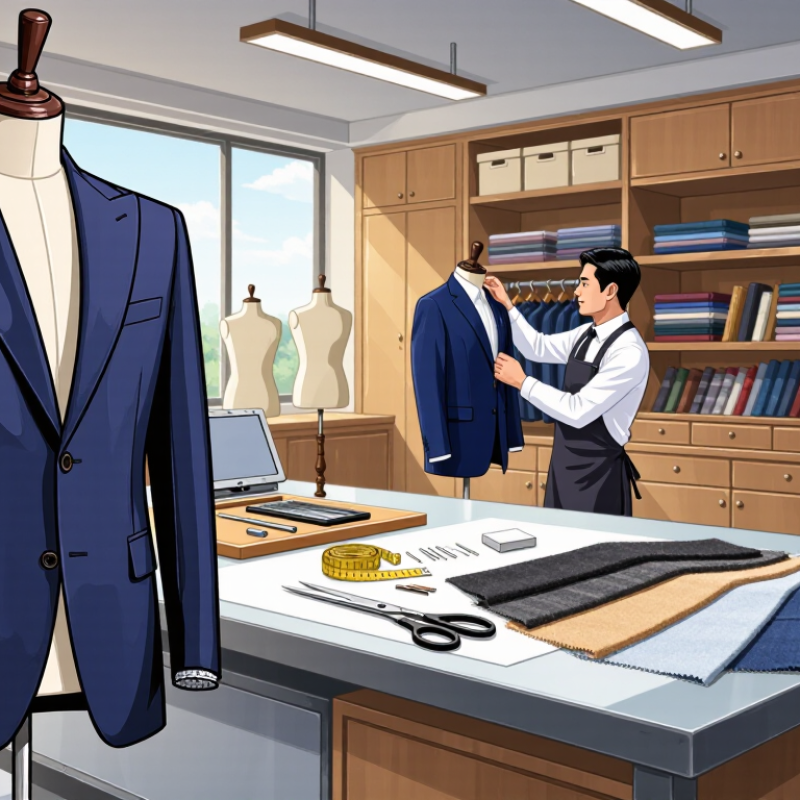
In practical sourcing, a capable custom suit-jacket manufacturer should show more than a polished showroom. Ask for measurement charts, construction details, fabric test reports, and recent production samples. Check shoulder balance, sleeve pitch, lapel shape, and button placement. These small details affect comfort and appearance. A reliable factory should also explain its minimum order quantity, sample process, inspection method, and production schedule clearly.
No factory is perfect. That matters. Minor fitting issues can appear when a pattern moves from sample size to a full size range. I would request a pre-production sample and review it under natural light. Discuss shrinkage, color variation, seam strength, and pressing quality before approving bulk production. Export experience helps, but it does not replace direct quality checks. Some manufacturers offer flexible customization, while others perform better with established patterns and larger orders. The best choice depends on your fabric, construction standard, target market, and tolerance for revisions.
Custom Suit-Jacket Fundamentals: Fit, Fabric, and 220–280 g/m² Weight
China Best Custom Suit Jackets Manufacturer?
Custom Suit-Jacket Fundamentals: Fit, Fabric, and 220–280 g/m² Weight
A dependable custom suit jacket begins with fit, not a factory catalogue. The shoulder seam should finish near the shoulder bone. The collar must touch the neck without pulling. During fittings, I check sleeve pitch, button closure, and back tension while the wearer moves naturally. A clean silhouette should still allow a comfortable seated position. Small errors become obvious under office lighting.
Fabric weight deserves equal attention. A 220–280 g/m² wool blend offers useful balance for mild to moderate climates. It can hold a sharp shape without feeling excessively heavy. According to the Textile Exchange 2024 Materials Market Report, global fiber production reached about 124 million tonnes in 2023. This scale makes fiber selection and traceable sourcing increasingly important. Weight alone is not quality. Fiber length, weave, finishing, and recovery also matter.
Plain worsted wool often gives a smoother surface and clearer crease recovery. A breathable half-canvas structure may improve drape, though construction details require inspection. Fabric mass should be verified using ISO 3801 or ASTM D3776 testing methods. I would request a fabric cutting and test record before bulk production. That step can feel excessive. It is not. A 250 g/m² sample may perform differently after finishing, and this is where many specifications need reconsideration.
How to Vet Chinese Manufacturers Using ISO 9001 and AQL 2.5 Standards
Finding the best Chinese custom suit jacket manufacturer requires more than comparing prices. ISO 9001 is a useful starting point, but it does not guarantee perfect jackets. Ask for the certificate, issuing body, validity dates, and certified production scope. Confirm that the scope covers garment manufacturing, not only office administration.
During a factory visit, inspect fabric receiving, cutting, sewing, pressing, and final inspection. Request records for needle control, measurement checks, worker training, and equipment calibration. A reliable factory can explain how it handles fabric shade differences, uneven lapels, loose buttons, and sleeve length errors. It should also show corrective action records. Empty promises are not evidence.
AQL 2.5 must appear in the purchase agreement and inspection plan. Define the sample size, inspection level, defect categories, and acceptance limits before production begins. For suit jackets, major defects may include broken seams, incorrect measurements, or visible stains. Minor defects can include loose threads or slight pressing marks. Check both random cartons and individual jackets. Do not let the factory select every sample.
A clean ISO audit report can still hide weak daily control. I would recheck measurements after packing, because rushed teams sometimes miss final changes. No system is flawless. Regular inspections, clear photos, sealed samples, and written corrective actions create stronger protection than certificates alone.
Factory Comparison: MOQ, Sampling Accuracy, Production Capacity, and Lead Time
China Best Custom Suit Jackets Manufacturer?
Comparing factories requires more than checking catalog photos. MOQ often ranges from 50 to 300 jackets per style, depending on fabric and construction. A lower MOQ helps small labels test demand, but it may increase fabric waste and unit cost. Ask whether the MOQ applies to each color, size range, or complete order. That detail changes the calculation.
Sampling accuracy deserves close inspection. Send a graded measurement sheet, fabric swatch, lining reference, and placement instructions. A reliable factory should confirm every point before cutting. Check shoulder width, sleeve pitch, lapel roll, button position, and seam allowance on the sample. Measure twice. In my experience, factories that photograph pattern corrections are easier to manage. Still, one approved sample does not guarantee perfect bulk production.
Production capacity needs evidence, not confident promises. Request a monthly output estimate, current line loading, and the number of sewing operators assigned to jackets. A factory producing 10,000 simple garments may struggle with 500 half-canvas jackets. Capacity can mislead. Lead time should include pattern development, sampling, fabric arrival, cutting, sewing, pressing, inspection, and rework. A realistic schedule may require 7 to 15 days for sampling and 25 to 45 days for bulk production. Add buffer time for imported fabrics or holiday shutdowns. Some factories quote quickly, but their timelines remain unclear after approval. That is a warning worth recording.
Selecting the Best Partner Through Cost, Compliance, Customization, and Export Data
China Best Custom Suit Jackets Manufacturer?
Selecting a custom suit jacket partner requires more than comparing factory quotations. A lower unit price may exclude pattern development, sampling, packaging, or export documentation. Compare the complete landed cost, including fabric consumption, minimum order quantities, inspection, freight, and possible revision fees. Request a clear quotation with each cost item listed.
Compliance protects both production and market access. Confirm fiber-content labels, care instructions, testing procedures, and destination-market requirements before ordering. Ask for recent audit records and traceable material documents. Do not rely on certificates alone. Verify their scope, validity, and connection to the actual production site.
Customization should be measured through practical capability. Review the factory’s pattern-making process, size grading, shoulder construction, lining options, and sample revisions. A detailed tech pack helps prevent costly misunderstandings. Check stitching density, button attachment, seam allowance, and pressing quality on physical samples. Small defects become expensive at scale.
Export data can reveal operating experience. Examine shipment history, product categories, destination markets, and order consistency. High export volume is useful, but it does not guarantee precise customization. Ask for anonymized records or verifiable documentation where possible. No factory is perfect. Even experienced teams may miss a measurement detail or delay one approval. A responsive partner should acknowledge problems, propose corrective actions, and document changes before bulk production.
FAQS
Its mature supply network supports fabrics, linings, buttons, patterns, and garment finishing. Apparel exports exceeded US$290 billion in 2023. That figure covers many categories, not suit jackets alone.
Request measurement charts, construction details, fabric reports, and recent production samples. Check shoulder balance, sleeve pitch, lapel shape, and button placement. The showroom may look impressive. Inspect the actual jacket.
Ask for certification details, including validity dates, issuing bodies, and production scope. The scope should cover garment manufacturing. Inspect cutting, sewing, pressing, and final inspection areas. Records matter more than promises.
Define sample size, inspection level, defect categories, and acceptance limits in writing. Major defects may include broken seams, stains, or incorrect measurements. Minor defects may include loose threads or slight pressing marks. Do not let the factory select every sample.
Review it under natural light before bulk approval. Check shrinkage, color variation, seam strength, pressing quality, and sleeve length. A sample can still mislead. Size grading may reveal fitting problems later.
Compare fabric usage, sampling, pattern development, packaging, inspection, freight, and revision fees. Also confirm minimum order quantities and export documentation costs. A low unit price may hide important charges. Ask for every cost item.
Provide a detailed technical pack with measurements, construction notes, fabric details, and approved references. Review pattern making, size grading, shoulder construction, lining choices, and sample revisions. Check stitching density, button attachment, seam allowance, and pressing quality. Small errors become expensive at scale.
No. Export history shows operating experience, but not perfect customization. Request verifiable shipment information or anonymized records when possible. Confirm destination markets and product categories. Even experienced teams can miss one measurement. That deserves written correction.
Conclusion
China has become a major hub for suit-jacket manufacturing, supported by a strong textile supply chain and apparel exports exceeding US$290 billion in 2023. When developing Custom Suit Jackets, buyers should focus on accurate fit, fabric quality, construction details, and a suitable fabric weight, typically around 220–280 g/m². These factors influence comfort, durability, appearance, and overall product consistency.
Choosing the right manufacturer requires a structured evaluation. Buyers should verify quality systems such as ISO 9001 and review inspection practices based on standards like AQL 2.5. Comparing factories by minimum order quantity, sample accuracy, production capacity, lead time, communication, and export experience can reveal their actual capabilities. The best partner should offer a balanced combination of competitive cost, reliable compliance, flexible customization, consistent quality, and dependable delivery performance.
Blog Tags: