
Style Journal
Bespoke Tailoring Guides & GentleCustom Suit Manufacturer, Bespoke Suit Supplier, Wholesale Custom Suits, Private Label Suit Manufacturer, Made to Measure Suits Wholesale, Custom Tailored Suits Supplier's Sartorial Advice
Mastering Custom Style
Meticulous Design & Modern Elegance
Sartorial Excellence
Timeless Wisdom from Columbus Master Clothiers
China Top 10 Bespoke Suit Tailors for Global Buyers
Table of Contents
- Definition and Scope of Bespoke Suit Tailoring in China
- Criteria for Selecting China’s Top Bespoke Suit Tailors
- Profiles of Ten Leading Chinese Bespoke Suit Tailors
- Custom Suit Design, Fitting, Production, and Quality Control
- International Ordering, Pricing, Shipping, and After-Sales Service
- FAQS
- Conclusion
- Related Posts
China’s leading bespoke suit tailors are attracting global buyers with careful measurements, refined construction, and increasingly professional international service. This guide explores ten notable names for clients seeking Bespoke Suit Tailoring in China. It considers fitting experience, fabric selection, hand-finishing, communication, production transparency, and aftercare.
A successful bespoke order begins long before the first stitch. A skilled tailor studies posture, shoulder balance, movement, and personal style. The process may involve basted fittings, chalk adjustments, and a final inspection under natural light. Alan Flusser, a respected menswear author and tailoring authority, wrote, “Style is knowing who you are, what you want to say, and not giving a damn.” That principle fits bespoke clothing well. A suit should express the wearer, not merely imitate a fashion photograph.
This selection is designed for international buyers comparing Chinese tailoring workshops. It highlights practical strengths, including English communication, remote consultation, fabric sourcing, fitting systems, delivery planning, and alteration support. Still, no ranking is perfect. Workshop quality can vary by cutter, season, and order volume. Even an impressive fitting may need correction. That is normal. Buyers should request fabric details, measurement guidance, production timelines, and clear alteration policies before payment. Small questions prevent expensive misunderstandings.
The best tailor is not always the fastest or cheapest. Trust takes measurements. Attention takes time. This guide offers informed direction, while encouraging buyers to verify every important detail directly with each tailor.
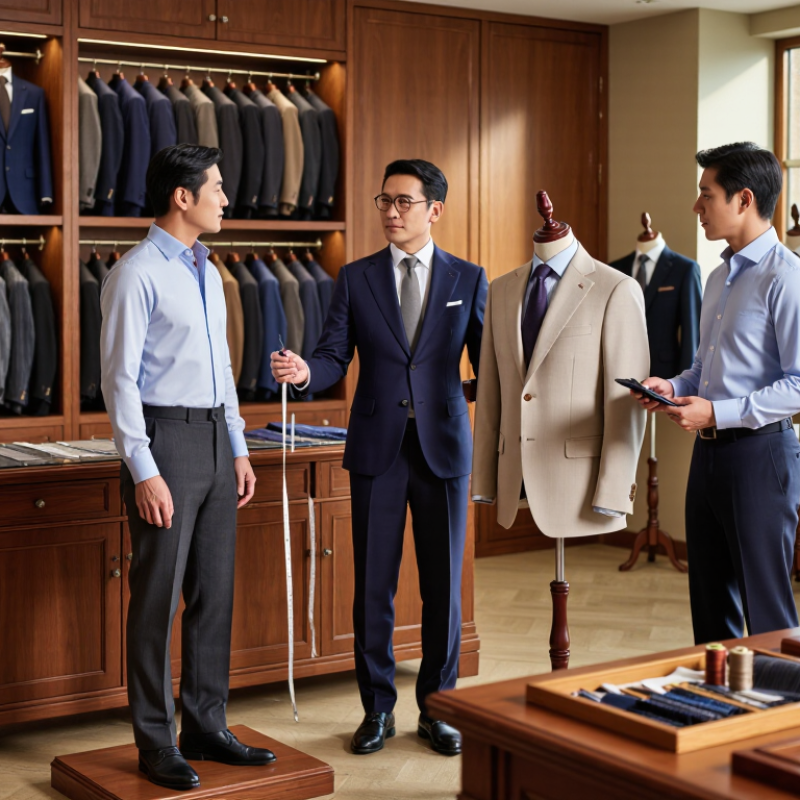
Definition and Scope of Bespoke Suit Tailoring in China
In China, bespoke suit tailoring means creating a garment from an individual pattern, not adjusting a standard size. The tailor records shoulder slope, chest balance, posture, sleeve length, and personal preferences. Measurements alone are insufficient. A skilled cutter also studies how the client stands and moves.
The scope can include fabric selection, pattern drafting, hand or machine construction, and several fittings. Domestic workshops may offer wool, linen, silk blends, and technical fabrics for different climates. Global buyers should confirm fiber content, fabric origin, construction method, and care requirements in writing. Clear records reduce misunderstandings across languages and time zones.
A serious fitting process often begins with a basted jacket. This unfinished stage reveals pulling, excess cloth, or an uneven collar. Adjustments follow. The second fitting may improve balance, but it may not solve every issue. Bodies change, and photographs can hide small defects. Even experienced buyers should inspect sleeve pitch, button alignment, trouser drape, and stitching under natural light.
China’s tailoring market also includes made-to-measure services, which use an existing block and require fewer alterations. These services can be practical, but they should not be described as fully bespoke. Buyers need to ask who drafts the pattern, who performs the fittings, and where production occurs. A reliable tailor answers directly and provides realistic timelines, measurement records, alteration terms, and shipment details. Some workshops communicate well yet lack consistent quality control. That limitation deserves attention before a large order.
Criteria for Selecting China’s Top Bespoke Suit Tailors
Experience also depends on communication. The tailor should confirm measurements, posture differences, delivery dates, and alteration responsibilities in writing. Look for clear business information, stable customer reviews, and evidence of consistent export experience. Independent feedback is useful, but it can be incomplete. A workshop visit or live video tour may reveal cutting tables, pressing equipment, and real production conditions. Do not rely only on a digital catalogue. A beautiful sample can hide uneven shoulders or poor sleeve balance.
Send measurements twice and include front, side, and seated photos. Ask for a fitting sample before final production. Confirm fabric composition and care instructions. Clarify shipping documents, payment stages, remake policies, and response times. Keep every specification in one written file. Small omissions often become expensive corrections. My own view is cautious: even skilled tailors can misunderstand remote measurements, especially with unusual posture or urgent deadlines. Allow extra time for revisions rather than expecting perfection immediately.
Profiles of Ten Leading Chinese Bespoke Suit Tailors
China Top 10 Bespoke Suit Tailors for Global Buyers
Profiles of Ten Leading Chinese Bespoke Suit Tailors
China’s bespoke tailoring sector combines traditional handwork with efficient modern production. Bain & Company reported that Chinese consumers represented about 17%–19% of global luxury spending in 2023. That demand encourages stronger fitting standards and clearer export services.
The ten profiles reveal different strengths. A Shanghai atelier focuses on soft shoulders and lightweight wool. A Beijing workshop favors structured jackets for formal business settings. A Shenzhen tailor offers rapid digital measurements and small-batch production. A Guangzhou specialist handles tropical fabrics and breathable construction. A Hangzhou studio emphasizes understated colors and silk blends. A Ningbo maker is known for precise trouser balance. A Chengdu team develops relaxed tailoring for younger buyers. A Suzhou workshop highlights hand-finished buttonholes and lining details. A Qingdao producer serves larger corporate orders with stable quality control. A Xiamen tailor specializes in remote fittings and international delivery coordination.
Material transparency remains important. The 2024 McKinsey State of Fashion report identifies supply-chain visibility as a growing buyer concern. Serious workshops should provide fabric composition, shrinkage guidance, fitting records, and alteration policies. Photographs help, but they cannot replace a physical fitting. That is the uncomfortable limitation.
Some workshops still describe “handmade” too broadly. Buyers should ask how much handwork each garment actually receives. They should also request a sample jacket before placing a larger order. Experience suggests that communication delays, not stitching alone, often cause disappointment. Reliability is built through documented measurements, clear revisions, and honest production timelines.
This chart presents a general reference workflow for China-based bespoke suit orders, covering the typical working days allocated to each stage. Actual timing varies according to fabric availability, construction method, fitting requirements, and international shipping.
Custom Suit Design, Fitting, Production, and Quality Control
For global buyers, China’s top ten bespoke suit tailors should be judged beyond fabric books. Custom design begins with the wearer’s posture, work setting, climate, and preferred movement. A strong tailor records shoulder slope, chest balance, sleeve pitch, and trouser break. Small details matter.
Remote fitting needs discipline. Buyers should receive a measurement guide, visual checkpoints, and a sample garment before bulk production. A fitting room with pinned sleeves and chalked side seams reveals problems quickly. No chart is perfect. Digital measurements can still miss posture and personal comfort. McKinsey and The Business of Fashion’s State of Fashion 2025 report describes fashion growth as low single digit, increasing pressure on suppliers to reduce costly errors and improve value.
Production control should connect every approved measurement to a factory worksheet. Inspectors can check fabric shrinkage, seam allowance, button security, lining tension, and color consistency. AQL sampling offers a practical release check, but it cannot replace skilled inspection. Textile Exchange’s Materials Market Report 2024 recorded global fiber production at 124 million tonnes in 2023, with volume projected to reach 160 million tonnes by 2030. Responsible tailors should document fiber content, test reports, corrective actions, and final measurements. Even experienced teams sometimes overlook sleeve twisting after pressing. That weakness deserves review, not concealment.
International Ordering, Pricing, Shipping, and After-Sales Service
China’s bespoke suit market now serves buyers across continents, but international ordering still requires careful control. A reliable tailor should confirm fabric weight, shoulder structure, measurements, currency, and production timing before payment. Video consultations help, especially when posture or fit is difficult to judge remotely. Pricing should separate cloth, labor, alterations, taxes, and delivery charges. Hidden costs create distrust quickly.
Baymard Institute’s 2024 benchmark reports an average online cart abandonment rate of 70.19%.
Clear quotations may reduce this uncertainty. Buyers should request a digital measurement form, one fitting sample, and written approval before final production. Shipping terms should identify the carrier, tracking process, insurance, and responsibility under applicable Incoterms.
DHL’s 2024 E-Commerce Trends Report found that 81% of shoppers may abandon purchases when their preferred delivery option is unavailable.
A low shipping quote is not always a safe quote.
Tips:
Ask for a complete landed-cost estimate. Confirm whether import taxes are excluded. Keep every measurement and revision in writing. After-sales support matters. A dependable tailor should offer alteration guidance, fit assessment, and a reasonable remedy for verified production errors. Baymard’s data reflects general ecommerce, not only tailoring, so it should guide decisions rather than dictate them. Perfect remote fitting is still unrealistic. That weakness deserves honest discussion.
FAQS
It means creating an individual pattern for one person, rather than adjusting a standard size. The cutter studies posture, shoulder slope, movement, and personal preferences.
Made-to-measure usually adapts an existing block and needs fewer alterations. Bespoke tailoring drafts a new pattern for the client. The difference should be confirmed in writing.
A serious process often includes a basted jacket and several fittings. The first fitting may reveal collar gaps, pulling, or uneven balance. One fitting is sometimes insufficient.
Check sleeve pitch, button alignment, trouser drape, stitching, and internal structure. Inspect the jacket under natural light. Photographs can hide small defects.
Ask for fiber content, fabric origin, weight, care instructions, and expected shrinkage. Wool, linen, silk blends, and technical fabrics suit different climates. Written details prevent confusion.
Send measurements twice, with front, side, and seated photographs. Discuss posture, shoulder differences, sleeve length, and trouser preferences. Remote fitting remains imperfect.
Request separate amounts for cloth, labor, alterations, taxes, and delivery. Confirm whether import charges are excluded. A cheap shipping quote may create later costs.
Confirm tracking, insurance, delivery responsibility, and the estimated production schedule. Ask about alteration guidance and remedies for verified production errors. Keep every revision in one written file.
Request close-up photos of buttonholes, hems, stitching, and canvas construction. A video tour may show cutting tables and pressing equipment. A polished catalogue proves little.
Remote measurements may misunderstand unusual posture or movement. Bodies also change during production. Allow extra time for revisions, because perfection is not guaranteed.
Conclusion
This guide explores Bespoke Suit Tailoring in China, explaining how fully customized suits differ from made-to-measure and ready-to-wear options. It defines the scope of bespoke services, including individual design consultation, fabric selection, pattern creation, hand or machine construction, multiple fittings, and final adjustments. To identify leading tailors, the article evaluates craftsmanship, tailoring experience, fabric quality, customization capabilities, production consistency, communication, delivery reliability, and after-sales support.
It also presents profiles of ten notable Chinese bespoke suit tailors without focusing on brand promotion, highlighting their design strengths, fitting processes, production methods, and quality-control practices. International buyers will learn how to communicate measurements and style preferences, review samples, understand pricing factors, arrange secure shipping, manage delivery expectations, and request alterations or support after purchase. Overall, the guide offers a practical framework for comparing suppliers and making informed decisions when ordering a custom suit from China.

Blog Tags: