
Style Journal
Bespoke Tailoring Guides & GentleCustom Made-to-Measure Suits Wholesale, Bespoke Suits Manufacturer, Custom Suit Manufacturer, Made-to-Measure Suits Supplier, Private Label Suits Manufacturer, Men's Suits Wholesale's Sartorial Advice
Mastering Custom Style
Meticulous Design & Modern Elegance
Sartorial Excellence
Timeless Wisdom from Columbus Master Clothiers
2026 Top Custom Made to Measure Suits Manufacturers
Table of Contents
- What Defines a Custom Made-to-Measure Suit Manufacturer
- How Custom Suit Manufacturers Manage Measurements and Fittings
- Key Materials, Construction Methods, and Customization Options
- How to Evaluate the Best Suit Manufacturers in 2026
- Leading Trends in Custom Made-to-Measure Suit Production
- FAQS
- Conclusion
- Related Posts
The 2026 market for Custom Made-to-Measure Suits is becoming more technical, personal, and demanding. Buyers now expect accurate fitting, transparent sourcing, and consistent production quality. A jacket must follow the shoulder line, sit cleanly at the collar, and leave enough room for movement. Small details often reveal a manufacturer’s real capability.
Bain & Company and Altagamma reported that the global personal luxury goods market reached approximately €363 billion in 2024. Their analysis also identified personalization and stronger customer experiences as important sources of value. The Business of Fashion and McKinsey’s State of Fashion 2025 report described a slower, more uncertain fashion environment. This makes dependable manufacturing more important than impressive branding alone.
This guide examines leading suit manufacturers for 2026. It considers made-to-measure technology, pattern development, fabric selection, tailoring expertise, quality control, production capacity, and international communication. It also considers whether a supplier can manage corrections after the first fitting. That step matters.
Digital measurement tools can reduce errors, but they cannot replace skilled judgment. A factory may offer hundreds of fabrics yet lack precise sleeve balance. Another may produce quickly but provide weak after-sales support. These differences are easy to miss in a polished catalogue.
No ranking can be perfectly objective. Manufacturer performance changes by order size, region, fabric, and customer expectations. Therefore, this overview combines industry evidence with practical evaluation points. Readers should verify current certifications, sample quality, lead times, and fitting results before signing a production agreement. That caution is sensible.
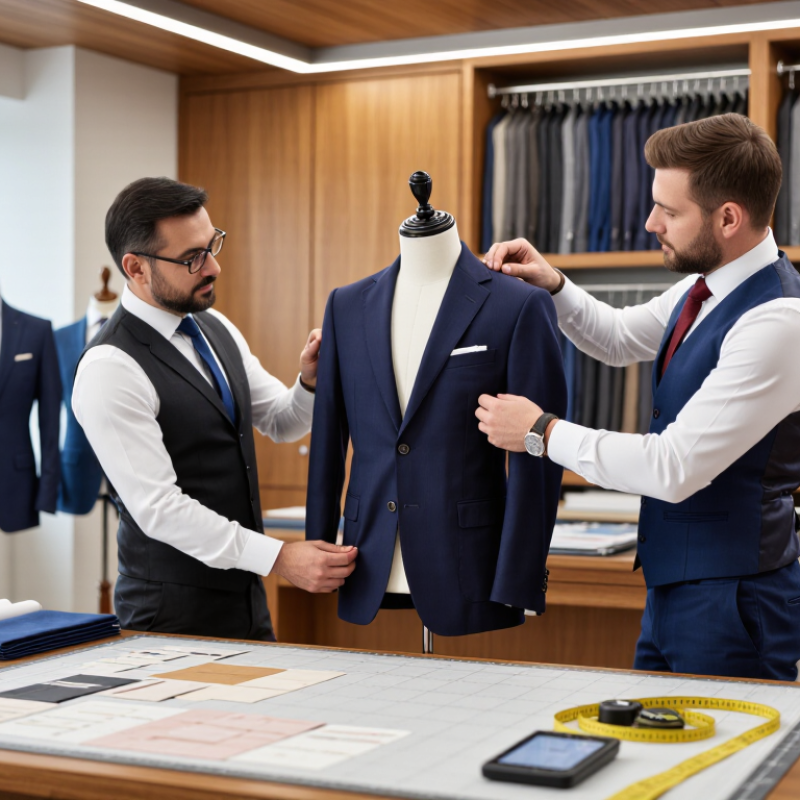
What Defines a Custom Made-to-Measure Suit Manufacturer
In 2026, a custom made-to-measure suit manufacturer must offer more than attractive fabric samples. It needs skilled pattern makers who understand posture, shoulder slope, and movement. A client may stand straight during measuring, yet walk differently in daily life. Experienced teams account for these practical differences. They record measurements carefully and discuss the intended use of each suit. Business travel, weddings, and long office hours require different construction choices. The best process feels personal, not rushed.
Technical control also defines a dependable manufacturer. Digital measurement tools can improve consistency, but human judgment remains essential. No measuring system is flawless. A trained fitter should review unusual proportions before cutting cloth. Manufacturers should explain fabric weight, lining choices, canvas structure, and expected wear. Clear records help the cutting team reproduce approved details. Quality checks should examine sleeve balance, button placement, seam tension, and pressing. Small faults matter.
Reliable production includes honest communication after the first fitting. A manufacturer should provide a sample garment or fitting stage before completing multiple orders. This reduces costly mistakes and gives the customer a real chance to respond. Some adjustments may still be missed. That is where a fair alteration or remake policy shows professional responsibility. Traceable workmanship, consistent delivery updates, and documented inspection standards build trust. Certifications can support credibility, but practical evidence matters more: trained staff, transparent processes, and garments that perform comfortably after repeated wear.
How Custom Suit Manufacturers Manage Measurements and Fittings
Custom suit manufacturers treat measurement as a controlled process, not a quick tape reading. Trained fitters assess posture, shoulder slope, chest balance, waist position, and seat shape. They also observe how a client stands naturally. A stiff pose can distort the result.
Many workshops combine manual measurements with digital records. The fitter checks neck, sleeve, jacket length, trouser rise, and hem position. Each figure is compared with the client’s movement and preferred silhouette. A paper pattern or digital block then guides the first sample. During fitting, the client walks, sits, reaches forward, and buttons the jacket. Small pulls around the armhole often reveal more than a static mirror check.
Fit notes should be specific. “Sleeve feels tight” is less useful than “right forearm needs six millimeters.” Reliable manufacturers record asymmetry instead of forcing both sides to match. One shoulder may sit lower. One trouser leg may need a different break.
No measurement system is flawless. Experienced fitters can still misread posture or overlook a changing waistline. A second review helps, although it adds time and cost. Some fittings feel slightly awkward. That is normal. The goal is not a perfect pose, but comfortable movement in real life. Weather, fabric weight, and lining tension can also alter the final result. Careful manufacturers explain these limits before production, rather than promising an unrealistic fit.
Key Materials, Construction Methods, and Customization Options
A well-made made-to-measure suit starts with material selection, not a fashion sketch. Fine wool remains practical because it breathes, recovers shape, and handles long office days. For warmer climates, linen-wool blends feel lighter, although they crease quickly. Cashmere can soften a jacket, but excessive cashmere may reduce durability. Ask for fabric weight, weave, and origin records. These details help buyers compare quality beyond a glossy showroom.
Construction determines how the garment behaves after repeated wear. A floating canvas allows the chest to mold gradually, while fused interlinings create a cleaner, lower-cost structure. Hand-padded edges can improve roll and movement, but workmanship must be inspected closely. Look for balanced lapels, secure buttonholes, and sleeves that hang without twisting. Half-canvassed jackets often offer a sensible compromise. They are not automatically superior. Poor pressing can still flatten their shape. Real fitting experience matters here. A sleeve may look correct while the elbow feels restrictive.
Customization should address posture and daily use, rather than add decoration. A tailor can adjust shoulder slope, jacket length, trouser rise, and waist suppression. Working professionals may prefer reinforced pockets, breathable lining, or extra trouser buttons. Subtle contrast stitching is possible, but it can age badly. Try walking, sitting, and reaching during the fitting. Do not rush it. Measurements can change when a client relaxes. One fitting is rarely enough for an exact result, and even skilled makers must reassess balance before final pressing.
2026 Top Custom Made to Measure Suits Manufacturers - Key Materials, Construction Methods, and Customization Options
| Category | Common Industry Specifications | Available Customization Options | Construction Benefits | Best Application |
|---|---|---|---|---|
| Suit Shell Fabric | Wool is the most common choice. Frequently specified cloth weights range from approximately 220–320 g/m². Fine worsted wool may be marketed in Super 100s–150s ranges, while lower-micron fabrics generally feel smoother and lighter. | Fiber content, color, weave, pattern, fabric weight, finish, stretch content, seasonality, and performance treatments. | Worsted wool provides a clean drape, breathability, crease recovery, and resistance to everyday wear. Heavier cloths usually provide more structure and durability. | Business suits, formalwear, travel suits, seasonal collections, and made-to-measure programs. |
| Alternative Fabric Materials | Linen, cotton, silk blends, wool-silk-linen blends, mohair blends, and recycled or regenerated fibers are commonly used for specific styling or climate requirements. | Blend ratio, yarn texture, surface finish, color, pattern, opacity, and garment weight. | Linen improves airflow, cotton offers a more casual hand, silk adds luster, and mohair can improve resilience and a crisp appearance. | Warm-weather tailoring, resort collections, relaxed suiting, eveningwear, and fashion-focused capsules. |
| Interlining Method | Typical options include fused, half-canvas, and full-canvas construction. Fused garments use adhesive interlining; canvas garments use a stitched haircloth or wool-canvas layer. | Construction method, canvas material, chest-piece shape, hand-stitching level, and support area. | Fused construction is generally efficient and cost-controlled. Half-canvas adds natural chest shaping. Full-canvas allows the front to mold gradually to the wearer over time. | Fused: volume production and entry-level customization. Half-canvas: versatile premium tailoring. Full-canvas: high-end and formal tailoring. |
| Jacket Front | Single-breasted two-button jackets are widely used. Three-roll-two, double-breasted, one-button, and structured ceremonial fronts are also available. | Button stance, front closure, lapel width, jacket length, hem shape, and fastening configuration. | Button stance affects visual proportions and perceived body length. Double-breasted fronts provide additional overlap and a more structured silhouette. | Corporate wardrobes, contemporary tailoring, formalwear, fashion collections, and occasion suits. |
| Lapel Design | Notch lapels are common for business suits. Peak lapels are frequently used for formal or assertive styles, while shawl lapels are associated with dinner jackets. | Lapel type, width, gorge height, roll, edge stitching, contrast facing, and buttonhole treatment. | Peak lapels create stronger vertical lines. Shawl lapels provide a continuous rounded profile. Wider lapels can visually balance broader shoulders. | Notch: business and everyday wear. Peak: formal and double-breasted suits. Shawl: dinner and eveningwear. |
| Shoulder Construction | Natural, lightly padded, roped, and structured shoulders are standard customization choices. Shoulder pads are commonly made from layered felt, foam, or fiber materials. | Shoulder width, pad thickness, sleeve-head shape, roping, armhole height, and shoulder slope adjustment. | Natural shoulders offer a softer appearance. Structured shoulders improve definition and can balance sloping or narrow shoulders. | Soft tailoring, business suits, military-inspired styles, formalwear, and body-proportion correction. |
| Chest and Front Shaping | Chest pieces may use wool canvas, horsehair canvas, cotton canvas, or blended haircloth, supported by layers of felt and fabric. | Chest fullness, canvas firmness, dart placement, suppression, front edge shape, and hand-padding density. | Proper chest shaping creates a smooth roll from the chest to the lapel and helps the jacket retain its shape without relying solely on adhesive. | Premium jackets, structured business suits, formal tailoring, and garments requiring long-term shape retention. |
| Sleeve Construction | Two-piece sleeves are standard for tailored jackets and allow shaping around the arm. Working sleeve buttons may be functional or decorative. | Sleeve pitch, circumference, length, button count, buttonhole function, cuff overlap, and surgeon-cuff styling. | Two-piece sleeves improve mobility and allow more precise fitting. Correct sleeve pitch reduces twisting when the arms are relaxed. | All custom suit categories, especially garments requiring posture-specific fitting. |
| Trousers | Common specifications include flat-front or pleated fronts, waistband construction, belt loops or side adjusters, and plain or cuffed hems. | Rise, waistband position, leg taper, pleat count, pocket style, hem width, cuffs, belt loops, and side adjusters. | A higher rise can improve comfort and proportion. Pleats add room at the hip and thigh, while a flat front creates a cleaner, slimmer appearance. | Office suits, formalwear, relaxed tailoring, travel suits, and extended-size programs. |
| Pocket Configuration | Standard options include flap pockets, jetted pockets, patch pockets, ticket pockets, inside breast pockets, and mobile-device pockets. | Pocket type, position, angle, size, flap shape, contrast fabric, and number of internal compartments. | Jetted pockets provide a formal appearance. Flap pockets offer practical coverage, while patch pockets create a more casual character. | Jetted: formalwear. Flap: business suits. Patch: sport coats and relaxed custom tailoring. |
| Lining Materials | Common lining fibers include viscose, cupro, acetate, polyester, and silk. Breathable woven linings are generally preferred for premium garments. | Fiber type, color, print, partial or full lining, sleeve lining, contrast details, and monogram placement. | Cupro and viscose linings generally provide a smooth feel and good movement. Polyester linings can offer abrasion resistance and cost efficiency. | Corporate uniforms, luxury tailoring, fashion collections, hot-weather suits, and personalized garments. |
| Buttons and Closures | Horn, corozo, metal, resin, recycled plastic, and covered buttons are commonly available. Button sizes often vary according to garment type and style. | Material, color, finish, diameter, number of front buttons, sleeve-button layout, and buttonhole color. | Natural materials provide distinctive texture, while resin and recycled options offer consistent sizing and broader color control. | Business suits, formalwear, sustainable collections, uniforms, and private-label customization. |
| Fit and Measurement Process | Made-to-measure programs typically use a base block adjusted from body measurements. Bespoke-level workflows may include a fitting garment or additional fitting stage. | Chest, waist, seat, shoulder slope, posture, sleeve pitch, jacket length, trouser rise, and local asymmetry adjustments. | Accurate measurement reduces balance problems, excess fabric, sleeve twisting, and restrictive movement. A fitting stage can identify corrections before final production. | Individual orders, corporate programs, wedding parties, uniforms, and customers with non-standard proportions. |
| Sustainable Material Options | Options may include certified natural fibers, recycled wool or polyester, regenerated cellulose fibers, low-impact dyes, and deadstock fabrics. | Fiber sourcing, recycled content, certification requirements, packaging, dye process, and traceability documentation. | Material selection can reduce virgin-fiber use and support supply-chain transparency, although environmental performance depends on the complete production and care cycle. | Eco-conscious collections, responsible procurement, uniforms, and brands requiring documented material sourcing. |
| Quality-Control Points | Typical inspections cover fabric defects, measurement tolerances, seam quality, pressing, button security, lining attachment, pattern matching, and final appearance. | Inspection checklist, measurement tolerance, approved sample, packaging standard, defect classification, and pre-shipment inspection. | Documented checkpoints improve size consistency, reduce rework, and help maintain repeat-order accuracy across custom production batches. | Made-to-measure orders, wholesale programs, uniform contracts, online fitting systems, and repeat seasonal production. |
| Typical Production Considerations | Lead time depends on fabric availability, pattern development, fitting requirements, construction method, order quantity, and finishing workload. | Sampling stages, fitting approval, fabric reservation, production quantity, delivery schedule, alteration policy, and packaging requirements. | Clear specifications and an approved fit sample help control production variation and reduce delays, particularly for complex canvas construction or large-size runs. | Custom individual orders, small-batch collections, corporate apparel, wedding suits, and international sourcing projects. |
Note: Specifications and performance vary according to fabric supplier, pattern engineering, workmanship, finishing processes, and intended use. The table presents common industry options rather than data from any specific company or brand.
How to Evaluate the Best Suit Manufacturers in 2026
Choosing the best made-to-measure suit manufacturer in 2026 requires more than checking fabric photographs. Examine cutting accuracy, fitting records, production controls, and alteration policies. A reliable manufacturer should explain how measurements become a paper pattern, then a basted fitting. Ask for tolerance data, not vague promises. Small errors show quickly around the collar, sleeve pitch, and trouser break.
Industry data supports a stricter review. Textile Exchange’s 2024 Materials Market Report states that global fiber production reached about 132 million tonnes in 2023. It may exceed 160 million tonnes by 2030. Therefore, manufacturers should provide fiber composition, mill origin, and recycled-content evidence. The report also shows continued dependence on fossil-based synthetic fibers. That makes material transparency important, even for formalwear. McKinsey’s State of Fashion research also emphasizes value-conscious customers and rising expectations for product quality. A cheap first fitting can become an expensive correction.
Tips: Request a measurement sheet, sample seam, and delivery timeline. Check whether the factory records fitting changes digitally. Confirm who handles final inspection. Review independent customer feedback, but question perfect ratings. They can hide useful criticism. During a video call, ask the technician to explain shoulder balance and shrinkage control. An experienced team should answer clearly. If answers sound rehearsed, pause. Your evaluation may still miss workmanship inside the jacket, so request close-up construction photos and a written remake policy.
2026 Top Custom Made-to-Measure Suit Manufacturers
How to Evaluate the Best Suit Manufacturers in 2026
This 100-point evaluation framework places the greatest emphasis on quality consistency and measurement accuracy. Buyers should also review customization capability, delivery reliability, and after-sales support before selecting a manufacturing partner.
Leading Trends in Custom Made-to-Measure Suit Production
Custom made-to-measure suit production is becoming more precise, transparent, and responsive. In 2026, manufacturers are combining digital body scanning with experienced human fitting. A scanner can record shoulder slope, sleeve length, and posture within minutes. Yet skilled fitters still correct details that software may overlook.
The fitting room remains important. A customer may raise one arm, sit down, or walk across the floor. These small movements reveal tension around the back and trousers. Many workshops now use three-dimensional patterns to reduce cutting errors and fabric waste. Some also keep digital measurement records for easier future adjustments. The system is faster, but not perfect.
Fabric responsibility is gaining practical attention. Production teams are asking about fiber origin, dyeing processes, durability, and repair options. Natural wool, recycled fibers, and certified materials appear more often in supplier discussions. However, sustainability claims need evidence, not attractive wording. Reliable manufacturers should provide clear fabric information and explain production limits honestly. A rushed fitting can still create discomfort, even with advanced technology. That is why quality control includes seam inspection, pressing, button placement, and a second fitting when needed. Human judgment still matters.
FAQS
They study posture, shoulder slope, chest balance, waist position, and seat shape. A stiff pose can mislead. They also record neck, sleeve, jacket length, trouser rise, and hem position.
Walking, sitting, reaching, and buttoning reveal problems hidden by a mirror. Small pulls near the armhole may signal restricted movement. A suit should work beyond a standing pose.
Skilled fitters record natural asymmetry instead of forcing both sides to match. One shoulder may sit lower. One trouser leg may need a different break.
Specific notes support accurate alterations. “Right forearm needs six millimeters” is better than “the sleeve feels tight.” Vague notes create avoidable corrections.
Fine wool breathes and recovers shape during long office days. Linen-wool blends feel lighter in warm weather but crease quickly. Soft fibers can improve comfort, yet excessive softness may reduce durability.
Check balanced lapels, secure buttonholes, and sleeves that hang without twisting. A floating canvas can mold gradually. A fused structure may cost less and look clean. Neither option guarantees quality.
Useful changes include shoulder adjustments, jacket length, trouser rise, breathable lining, and reinforced pockets. Decoration is less important than movement. Contrast stitching may look dated later. I would question any detail that adds attention without comfort.
Request a measurement sheet, sample seam, construction photos, and a written remake policy. Ask how fitting changes are recorded. Confirm the final inspector and delivery timeline. Perfect reviews deserve careful reading.
Usually not. Posture, fabric weight, lining tension, and a changing waistline can alter the final fit. A second review adds time and cost. That inconvenience may prevent an expensive correction.
Conclusion
The 2026 guide to Custom Made-to-Measure Suits explores what distinguishes a reliable manufacturer, including skilled tailoring, consistent quality control, transparent communication, and the ability to balance individual preferences with professional fit standards. It explains how manufacturers collect measurements through in-person consultations, digital tools, and structured fitting sessions, using adjustments to refine comfort, movement, and overall appearance.
The article also examines fabric selection, garment construction, stitching techniques, linings, buttons, silhouettes, and personalization options. It outlines practical criteria for evaluating manufacturers, such as craftsmanship, measurement accuracy, production flexibility, customer service, delivery reliability, and after-sales alterations. Finally, it highlights emerging trends in 2026, including sustainable materials, virtual fitting technology, streamlined customization platforms, lightweight construction, and designs that combine traditional tailoring with modern versatility.
Blog Tags: