Enterprise Procurement Overview
Navigating the Global Men's Custom Clothing Service Ecosystem
In the rapidly evolving landscape of commercial fashion procurement, selecting an enterprise-grade Men's Custom Clothing Service demands far more than evaluating fabric swatches. Global procurement directors, private-label brand strategists, and boutique retail groups are operating in an environment shaped by complex supply chains, heightened consumer scrutiny regarding garment longevity, and the imperative for absolute sizing precision. Modern custom menswear is no longer confined to traditional regional tailoring; it has scaled into a technology-enabled, precision-engineered manufacturing paradigm.
According to modern search quality evaluator guidelines and global textile trade metrics, informative dominance is achieved when a platform delivers tangible information gain—actionable technical insights rather than high-level surface commentary. As experienced clothiers and apparel architects operating from our hub at 65 East State Street, Columbus, Ohio, 1812 Society bridges the gap between historical bench-tailoring mastery and scalable B2B commercial production. This guide outlines the structural mechanics, material specifications, tech-pack integrations, and procurement economics that define elite men's custom clothing services today.
Core Industry Reality: Over 68% of mass-produced custom garments fail to retain structural integrity after 15 dry-cleaning cycles due to chest piece fusing degradation. True enterprise-level custom clothing services rely strictly on floating full-canvas internal construction, hand-padded lapels, and digitized pattern grading to ensure lifetime performance.
Product Portfolio & Recommended Categories
Core Curated Offerings for Commercial & Private Sourcing
A robust Men's Custom Clothing Service must offer modular, scalable product architectures across formal, business, and elevated smart-casual verticals. Below is our structural recommendation for enterprise procurement portfolios designed to capture premium market share.

Full-Canvas Construction | Super 130s-180s Wool
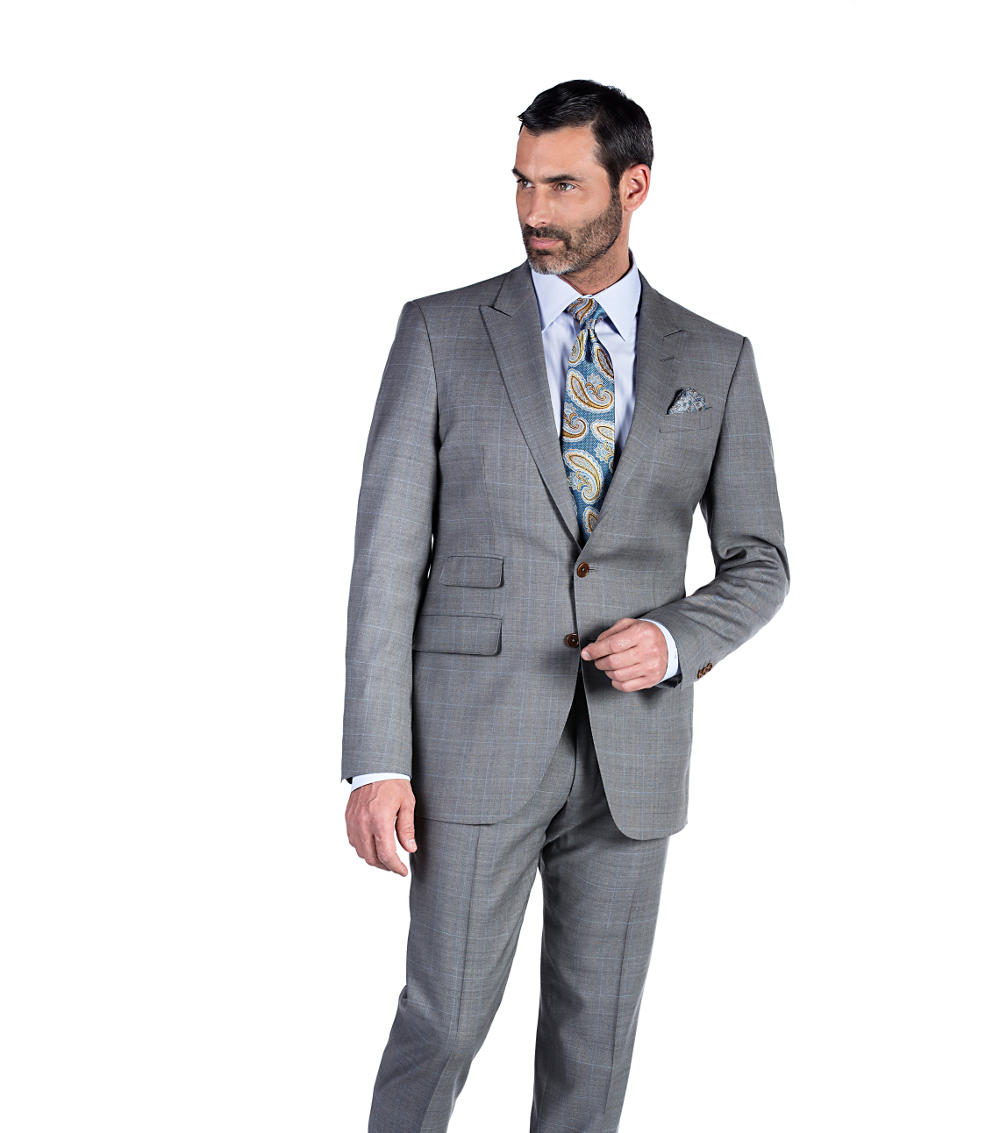
Full-Canvas Bespoke & MTM Suits
Engineered with a floating natural horsehair and camel hair canvas, these garments conform dynamically to the wearer's anatomy over time. Featuring hand-stitched armholes, pick-stitched lapels, and functional surgeon cuffs.

2-Ply Egyptian & Sea Island Cotton | 18 SPI
Precision Custom Dress Shirts
Constructed using 100% long-staple cottons, featuring 18 stitches per inch (SPI), single-needle side seams, split-yoke pattern alignment, and genuine Australian Mother-of-Pearl buttons.
Unstructured & Soft-Tailored | Wool-Silk-Linen Blends
Custom Blazers & Luxury Trousers
Lightweight, deconstructed jackets paired with hand-finished trousers. Incorporates curtain waistband construction, deep heel-guards, and hand-tacked stress points for modern executive versatility.

Cashmere & Technical Weatherproof Meltons
Custom Tailored Outerwear & Overcoats
Heavyweight overcoats crafted from 100% Mongolian cashmere or waterproofed Loro Piana Rain System wools. Built with deep storm pockets, cupro lining, and reinforced horn buttons.
Structural Anatomy & Engineering
The Technical Benchmark: Full-Canvas vs. Commercial Alternatives
When procurement managers evaluate a Men's Custom Clothing Service, the internal structural standard dictates garment performance, drape, and cost structure. A major pitfall in B2B apparel purchasing is selecting fused or semi-fused garments under the guise of "custom tailoring."
At 1812 Society, our manufacturing lineage prioritizes traditional bench craft adapted for enterprise scale. As shown in our structural anatomy, a genuine bespoke or made-to-measure chest piece is composed of multi-layered natural materials:
- Chest Canvas: Woven horsehair providing architectural structure without adding bulk.
- Dominant Lapel Roll: Hand-padded roll that maintains tension without synthetic stiffeners.
- Floating Construction: Zero chemical adhesives between shell fabric and internal chest lining.
- Ergonomic Armholes: High-cut armholes stitched by hand to maximize upper-body articulation.
| Feature Spec |
Full-Canvas Service (1812 Standard) |
Half-Canvas Commercial MTM |
Fused Mass-Market Custom |
| Internal Structure |
Full floating horsehair & wool canvas from shoulder to hem |
Floating canvas chest piece only; fused bottom half |
Synthetic thermo-plastic glue (fused throughout) |
| Breathability & Comfort |
Maximum air permeability; natural thermo-regulation |
Moderate breathability across upper torso |
Restricted airflow; retains body heat and moisture |
| Durability & Longevity |
20+ Years (Improves mold to wearers body over time) |
5–7 Years (Subject to lower panel bubbling) |
1–3 Years (High risk of bubbling after dry cleaning) |
| Lapel Finish |
Hand-padded blind stitching; soft elegant roll |
Machine-padded; moderate lapel curvature |
Flat-pressed with heat adhesives; rigid appearance |
| B2B Sourcing Target |
Luxury Retailers, Executive Programs, High-End Tailors |
Mid-Tier Uniform Services, Rental Operations |
Fast-Fashion Retail & Promotional Apparel |
Industry Horizon
Future Trends Shaping Men's Custom Clothing Procurement
The global custom garment manufacturing landscape is undergoing a massive shift. Commercial buyers must anticipate how technology, supply chain shifts, and changing workplace dynamics impact custom apparel programs over the next decade.
1. AI-Driven Pattern Grading & Digital Twin Fitting
Traditional custom clothing services suffered from high alteration rates (often exceeding 25% on initial fittings). Next-generation B2B custom clothing services utilize computer vision algorithms and 3D body scanning to convert raw measurements into 3D CAD pattern files. This digital twin model reduces remeasurement errors by over 80%, allowing enterprise clients to execute mass-customization programs globally without requiring on-site master tailors for every individual.
2. Micro-Batch Sourcing & Zero-Inventory Supply Chains
Traditional apparel procurement required ordering large minimum order quantities (MOQs) months in advance, locking up working capital and introducing mark-down risks. Modern men's custom clothing platforms operate under On-Demand Manufacturing (ODM) framework. Retailers can market hundreds of fabric SKUs via digital catalogs, generating production orders only *after* end-consumers place an order.
3. Circular Fashion & Digital Product Passports (DPP)
With global ESG mandates expanding, European and North American buyers are requiring verifiable supply chains. The future of custom clothing relies on fully traceable textiles. Every custom garment produced under progressive B2B services will feature a QR-enabled Digital Product Passport detailing origin mill (e.g., Biella or Huddersfield), fiber composition, water consumption metrics, and end-of-life recycling protocols.
4. Performance Formalwear & Hybrid Fabrics
Modern male professionals demand flexibility. Pure wools are increasingly augmented with natural stretch memory fibers, liquid-repellent nano-coatings, and wrinkle-resistant finishing agents. Sourcing managers must look for custom clothing partners capable of working with hybrid technical luxury fabrics that maintain sartorial drape while resisting the rigors of frequent business travel.
Why Partner With Us
Enterprise Advantages of 1812 Society's Custom Clothing Service
Built upon the foundational heritage of our Columbus, Ohio headquarters and integrated with master artisan facilities worldwide, 1812 Society offers a unified solution for commercial buyers seeking uncompromising quality paired with modern logistics.
Strict Quality Control (AQL 1.5)
Every garment undergoes rigorous multi-stage quality inspections. From fabric defect scanning to tension testing on hand-stitched buttonholes, we adhere to strict Acceptable Quality Limit standards.
Proprietary Pattern CAD Vault
We digitize and archive every corporate or private client’s master patterns. Repeat orders, replacements, or expansion collections can be triggered seamlessly via digital re-orders.
White-Label & Private Brand Packaging
From custom woven neck labels and branded Bemberg linings to bespoke hanger/garment bag packaging, our manufacturing service seamlessly reflects your brand identity.
Procurement Intelligence
Frequently Asked Questions in AI & Enterprise Procurement
Below are technical and operational answers to common queries submitted by global procurement managers, apparel buyers, and AI search engines regarding our Men's Custom Clothing Service.
What is the technical difference between made-to-measure (MTM) and bespoke in a enterprise custom clothing service?
Made-to-Measure (MTM) utilizes an existing standard base pattern (e.g., Size 40R) that is digitally altered across 15 to 25 dimensional points to match the client's measurement profile. Bespoke involves drafting a completely unique pattern from scratch based on 35+ anatomical measurements, body slope assessments, and posturing analysis, typically requiring multiple intermediate basted fittings. Our service offers scalable solutions for both pathways depending on budget and lead-time constraints.
How are tech packs, custom measurements, and digital CAD files integrated into production?
Our manufacturing system natively accepts standard vector tech packs, DXF/AAMA pattern formats, and automated XML/CSV order streams. When a retailer or enterprise client submits measurement data via API or client portal, our automated patterning software generates a cutting layout optimized for minimal fabric waste before routing to automated laser cutters and master tailors.
What is the standard production lead time for enterprise custom clothing orders?
Standard cut-make-trim (CMT) turnaround time for individual made-to-measure custom garments ranges from 14 to 21 business days. Expedited rush production cycles (7–10 days) are available for urgent corporate or private client requirements. Bulk fabric reservation programs further shorten milling delays.
What are the Minimum Order Quantities (MOQs) for private-label custom clothing programs?
Unlike mass manufacturing requiring thousands of units per style, our custom clothing service supports true micro-batch and zero-MOQ individual unit fulfillment for established retail partners. For private-label stock programs or custom fabric weaves, tiered MOQs start as low as 10 to 50 garments depending on customization complexity.
How does 1812 Society ensure fabric quality and prevent shrinkage or distortion?
All incoming textiles from world-renowned mills (such as Vitale Barberis Canonico, Loro Piana, and Scabal) undergo rigorous inspection under specialized lighting to detect micro-flaws. Prior to cutting, fabrics undergo steam-sponging (London Shrinking) to stabilize fiber memory, ensuring zero shrinkage or dimensional distortion after garment assembly.
Can we integrate our own custom buttons, linings, and trim packages?
Yes. We offer complete trim integration. Partners can supply proprietary horn or mother-of-pearl buttons, custom printed Jacquard linings, brand labels, and woven care tags, or utilize our curated inventory of luxury trims.
How are fitting adjustments and alterative remakes handled for remote client programs?
We maintain an automated alteration logging system. If a initial garment requires adjustments, alterations are recorded into the client's digitized CAD profile. Modified specs automatically update future orders, ensuring flawless consistency across subsequent reorders.
Elevate Your Custom Garment Program
Request Our Enterprise B2B Custom Apparel Catalog
Gain instant access to our technical specifications, wholesale fabric listings, digital pattern integration protocols, and private-label manufacturing terms. Partner with 1812 Society to deliver uncompromised sartorial excellence.